By Ebuka Onyekwelu
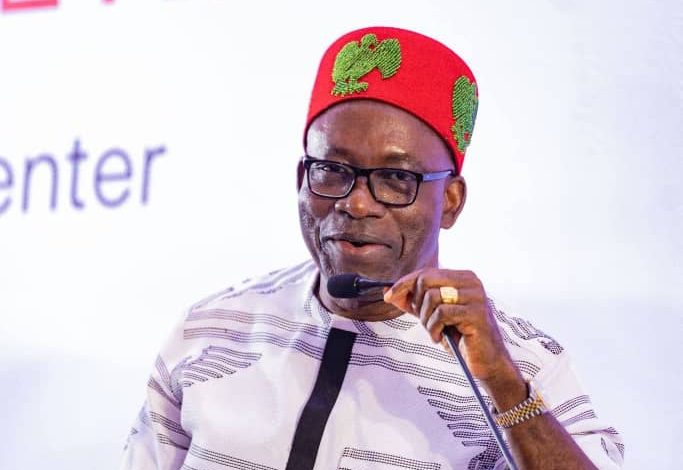
The Governor of Anambra State, Professor Charles Chukwuma Soludo, has deepened the conversation on State Police recently passed by Nigeria’s National Assembly, as he insists that the question is no longer if state police is appropriate, but now about how it must be implemented. Speaking at the ongoing Townhall meeting on State Police organized by Arise TV, Professor Soludo said that “The issue is no longer whether to have State Police or not, the question is how. I think now, the issue is how,” Professor Soludo reiterated.
Taking a closer look at the ongoing reforms to Nigeria’s Federalism by President Bola Ahmed Tinubu, the Anambra State Governor said it has not come as a surprise. Recalling how the President, then as Governor of Lagos State, consistently made a case for Nigeria to devolve power to sub-nationals and become more federal in practice, Soludo said he often calls the President the “Professor of federalism,” because of his astute commitment to a more functional federal system for Nigeria.
Yet, for Governor Soludo, it is not just about state police. Therefore, “State Police is not to be seen in isolation,” Soludo asserted, insisting that “State Police need to be seen in the context of the unfinished business towards a sustainable security and justice system,” Professor Soludo said.
To this end, Soludo pointed out that although more responsibilities have been handed down to the states, the revenue allocation formula has not been reviewed. He also discussed the centralized judicial system and the challenges it poses to a speedy justice system. Using Anambra as a case study, Governor Soludo said that land disputes are a major source of judicial process in Anambra State and that some of the cases take up to 30 or 40 years. Speaking on the need for reforms to correspond to the ongoing devolution of responsibilities to states, “I don’t understand why the issue of land should go beyond the State,” Soludo said, asking that “the conversation (should) go on towards a more sustainable federal structure.”
Governor Soludo’s in-depth contribution to the national conversation on Nigeria’s federalism has shed light on two more crucial areas requiring reforms for a better and functional federal system in Nigeria.