EDITORIAL: Assassination Attempt on Peter Obi: Nigeria’s Insecurity Under Greater International Watch
EDITORIAL

By Tony Okafor
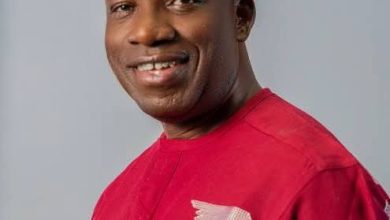
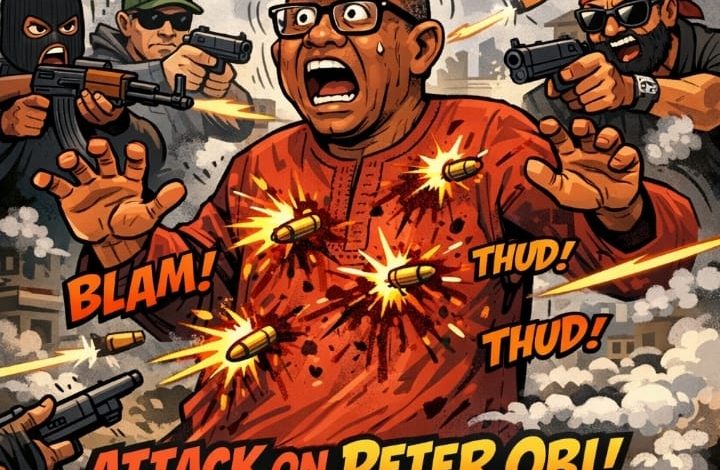
Nigeria stands at a critical juncture. The reported assassination attempt on frontline presidential aspirant Peter Obi in Benin City, Edo State, on Tuesday is not just another security breach in an already volatile nation. It is a direct assault on democracy and a reminder that political violence threatens the very right of every Nigerian to participate safely in the political process.
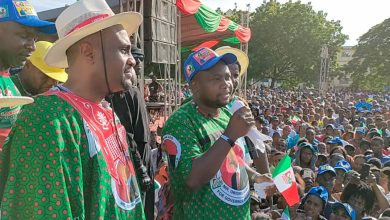
According to reports, hoodlums opened fire at an event he attended and allegedly pursued his convoy in what appeared to be a coordinated attack. Though Obi escaped unharmed, the implications are grave.
When a leading political figure can face gunfire in broad daylight, the nation’s stability and democratic foundations are put at risk.
The question Nigerians must urgently ask is simple: who wants Peter Obi dead, and why? Such acts strike at public confidence and risk deepening fear and division.
Throughout his political journey, Obi has shown remarkable restraint and commitment to peace. From his tenure as governor to his 2023 presidential campaign and subsequent national engagements, he has consistently promoted civility, issue-based politics, and lawful opposition. Even under provocation, he has repeatedly called for non-violence and encouraged civic participation without incitement.
In a political environment often marked by hostility and incendiary rhetoric, Obi’s measured approach has been exemplary. An attack on him sends a chilling message that moderation offers no protection, that peaceful opposition is vulnerable, and that political engagement may carry mortal risk.
The Federal Government must treat this incident with the seriousness it deserves. President Bola Ahmed Tinubu has the constitutional duty to ensure the safety of all Nigerians, regardless of political affiliation. Silence or delay only fuels suspicion, encourages conspiracy theories, and erodes public trust in state institutions. A high-powered, transparent investigation is not optional—it is imperative.
Nigeria’s insecurity has already attracted significant international concern. Investors, foreign governments, multilateral institutions, and human rights organisations are watching closely. An unaddressed assassination attempt on a leading political figure would only heighten global alarm and reinforce perceptions of instability.
Political rhetoric must be measured. Words from public officials carry weight in a fragile security environment. Threats, explicit or veiled, can embolden reckless actors. Leadership demands responsibility, restraint, and the recognition that democracy thrives on debate, persuasion, and the rule of law—not intimidation or bullets.
That is why the comment by the Edo State Governor raises grave concern: “There is a new sheriff in town. Peter Obi cannot just come into Edo without informing me. His security will not be guaranteed. If anything happens to him here, he will have himself to blame. I’m not joking.”
Such statements, in the context of real threats, cannot be dismissed. They carry serious implications for the safety of citizens and the credibility of governance.
This moment is bigger than Peter Obi. Today it is him; tomorrow it could be another figure from another party. Once political violence becomes normalised, no one is safe. The erosion of democratic norms begins with isolated incidents that go unpunished and gradually becomes a culture of impunity.
President Tinubu must rise above partisanship and order a thorough, independent investigation. The findings should be made public, and perpetrators must be brought to justice.
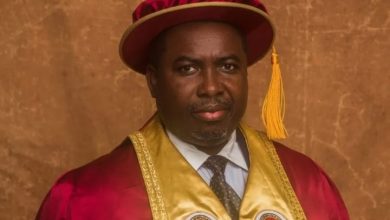
He should also ensure full involvement of the Monday Okpebholo administration, given that the incident occurred within its jurisdiction.
Only decisive action can reassure Nigerians that the state protects all citizens and does not tolerate political bloodshed.
Nigeria’s democracy has survived military rule, electoral crises, and deep national divisions. It must not now bow to the bullet. Power is transient; the nation is permanent. No political ambition, partisan calculation, or electoral advantage is worth a single life.
History will judge how this moment is handled. The nation watches. The world watches. And democracy itself awaits a decisive answer.