BY TONY OKAFOR
Say it anywhere: restriction of movement on election day is outdated, unnecessary, and fundamentally counterproductive.
What may have begun decades ago as a “security measure” has calcified into a blunt, unimaginative policy that punishes citizens, suppresses participation, and undermines the very democratic process it claims to protect.
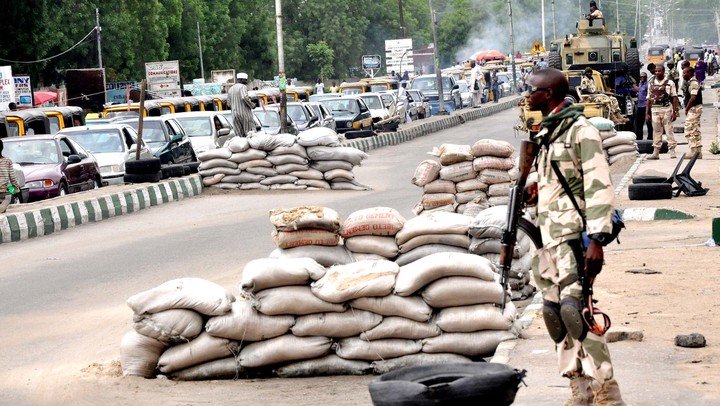
Year after year, we lament voter apathy, vote buying, and low turnout, yet we blame everything but the obvious: the election-day lockdown, enforced with an overwhelming security presence that turns our streets into militarised zones.
When democracy is made to look like war, citizens retreat—and when citizens retreat, democracy loses its soul.
Take the November 8 Anambra Governorship Election, for instance. More than 45,000 police personnel flooded the state—an astonishing figure that did not include soldiers, civil defence operatives, and other security agencies on duty.
Yet what did this massive force actually accomplish? The day passed peacefully, with officers largely idle, waiting for crises that never came.
Meanwhile, taxpayers bore the cost of allowances, logistics, and feeding, as logs of wood and old tyres disfigured our streets in the name of security checkpoints and roadblocks. It was waste on a monumental scale.
Democracy is not nurtured by fear. It is strengthened by freedom. In any respectable democratic society, citizens should be free to move, free to vote, and free to live their lives without state-imposed paralysis.
No one should feel imprisoned in their own neighbourhood simply because an election is taking place. If the truly desired outcome is increased participation, then restricting movement is not only irrational—it is destructive to the democratic spirit.
There is a dignified, globally accepted alternative: declare a public holiday. Give citizens the time and mental ease to vote. Allow businesses to close gracefully. Let life flow. Nearly every advanced democracy does this, trusting their citizens, their institutions, and their electoral systems.
Nigeria must ask itself why it continues to choose the path of fear and force over reason and freedom. The consequences of the lockdown tradition are damning:
First, it drives voter apathy and low turnout. Those who live far from polling units, depend on public transport, or have been relocated simply stay home. The lockdown sends a clear message: voting is an inconvenience.
Second, it cripples the economy. Essential workers are stranded, small businesses lose critical revenue, and emergency situations become tragedies in waiting.
Third, it fosters an atmosphere of anxiety, making election day feel like a state of emergency rather than a national civic exercise. Instead of confidence, it produces tension.
Fourth, it concentrates disproportionate power in the hands of security agents, who often enforce restrictions unevenly, with little transparency and even less accountability.
If elections can only be safe under a lockdown, the fault lies not with the voters but with the system itself. Civic participation thrives in openness, not confinement. Elections should be a celebration of collective choice, not a day of national paralysis.
The time has come to abandon this obsolete ritual. Nigeria needs a more enlightened electoral culture—one that prioritises freedom, confidence, accessibility, and participation.
No law is violated if a citizen leaves Onitsha for Agulu on election day to cast a vote.
A practice that has endured for decades without yielding any genuine benefit is, by every honest measure, a dead practice.
It is time to bury it—once and for all.