By Dr. Ebuka Onyekwelu
Africa is now returning to its vomit two decades after it jettisoned military rule and embraced civilian governance. All of a sudden, military rule has once again become attractive not just to military dictators, but to the African populace whose past time now includes cheering their new ‘heroes’. With a long history of human rights abuses, corruption, and nepotism that shaped the post-independence Africa, military intervention in the politics of many African countries in the 1970s, 1980s, and 1990s was merely a change of baton that escalated rights abuses, corruption, and nepotism to an industrial scale. However, with the return to civilian rule, there was a sigh of relief, which has disappeared, only to usher in another sigh of relief for the uniform rulers.
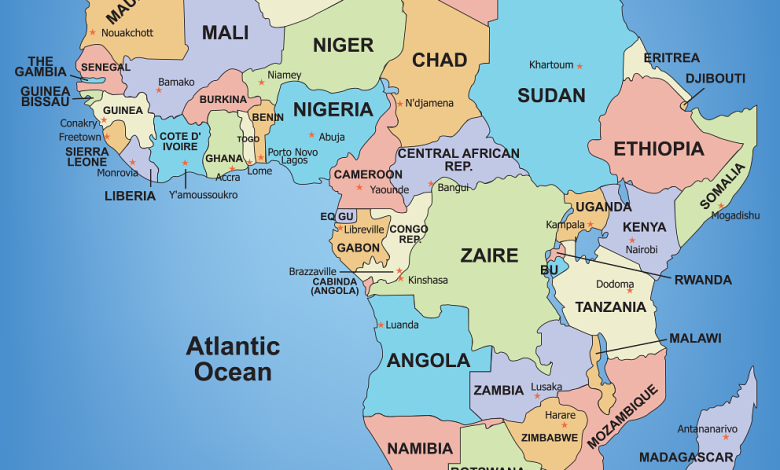
It is interesting that two decades down the line, Africans are, once again, cheering military juntas or calling for the military to displace their civilian government, as some do on social media. To buttress the seriousness of the return of the military in African politics, between 2020 and 2025, Africa has experienced no fewer than 17 coups, out of which 16 were successful. In the list, Mali has experienced a coup both in 2020 and in 2021. The latest coup is the one in the Benin Republic, which has been declared unsuccessful. The “coup belt,” now under military dictatorship, is effectively back to the drawing board with more critical development questions put on hold, amidst escalating insecurity. This is the African story of a deep and troubling somersault embedded in a desire for a messiah and a subterranean crisis of progress that keeps the people running round the same cycle. This contrasts with the “African rising” narrative, which Professor Kingsley Moghalu, political economist and President of the Institute for Governance and Economic Transformation, has dismissed as a farce.
Disconnected from their government in totality, many Africans find justification for coups. For them, a failed government should be displaced by any means possible. To their minds, something that is not working should be discarded. Since the government is not working, even the state can be disbanded. Yet, military juntas, in the experience of Africans, cause far more displacements and social chaos than their civilian counterparts. This situation signals a particular haste for quick fixes, which makes many Africans susceptible to deceit and the charm of agitation leaders who speak loud rhetoric against the government. Many fail to really probe the type of public safety, human dignity, and progress that can be achieved under such human beings as leaders. The fact that many Africans still justify banditry and terrorism only because of opposition to the government speaks to a much dangerous malevolence that is not getting enough attention that it deserves. There is a severe crisis of citizenship that is driving extreme discontent both against the government and against the state. There is also a present challenge of how to engage and strengthen governance without having to weaken the state. This will naturally take us back to the origin of states in Africa and the lack of internal ownership of these states. But the problem is even deeper. Thus, throwing up the following fundamental questions: How best then should Africans be governed and at what level? How best should the African be enticed to take ownership of his own environment? Assuming that tribal identity is a major roadblock to Africa’s development challenge, how have regional governments in Africa changed the fortunes of their own people? There is no region, tribe, or ethnic group with such a story of success tied to its identity in political governance across Africa. Not even in their smallest unit. Yet, every group is in charge of its own governance in its region. It is, therefore, not exactly correct that Africa would have become something far from its current experience if the states were created differently or organically, rather than through colonial appendages. South Sudan, the newest sovereign state that gained independence in 2011, now faces far more troubles than can be imagined for a new country with strong religious and ethnic affinities. Originally proclaimed in 1972 during the first civil war in Sudan, South Sudan has been through a bitter civil war, considered the poorest country in the world, and perhaps now in a worse condition than the mother country, which was formerly conceived of as its problem. It turned out that the problem was deeper than ethnic and religious divides.
The recurrent decimal in which Africans have to make difficult choices between a failed civilian government and a formerly failed military dictatorship in the hope that somehow, the same military which has thoroughly failed at governance will become the new messiah is delusional. In the end, coups will lead to more coups. At the same time, the society is plunged into more chaos, cavernous social disorder, and political instability that further stamp out Africa’s chances of real progress. Africa is still trapped in a vain competition for political power, primarily for proximity to economic power, and this is even more bizarre under military dictatorship.