Police Detain Anambra Journalist at House of Assembly Complex, Call Him “Enemy”
Media

By Ifeizu Joe
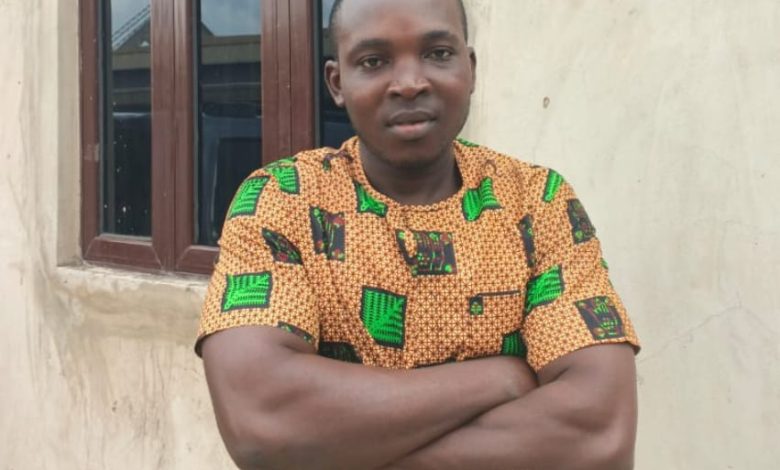
An Anambra-based journalist, Mr. Izunna Okafor, on Wednesday, December 10, 2025, was reportedly detained by security operatives at the gate of the Anambra State House of Assembly Complex, Awka, following what has been described as a “protocol issue” that degenerated into harassment, intimidation, seizure of personal devices, and threats of further detention at a police division.
In a detailed personal account shared on social media and made available to this reporter, Okafor disclosed that the incident occurred while he was on official assignment to cover the budget defence of the Anambra State Commissioner for Power and Water Resources, Engr. Julius Chukwuemeka.
According to Okafor, he arrived at the Assembly Complex after experiencing a minor mechanical fault on his vehicle on the way. On approaching the gate, security personnel comprising officers of the Nigeria Police Force and the Nigeria Security and Civil Defence Corps ordered him to park outside the premises, an instruction he said he immediately obeyed.
He recounted that after alighting from his vehicle and heading toward the entrance, the same officer who had earlier ordered him to park outside called him back and politely asked for his identity and the purpose of his visit. Okafor said he properly identified himself as a journalist and informed the officer that he was on assignment to cover the budget defence of the Commissioner for Power and Water Resources, whom he said he could clearly sight inside the premises with other journalists, from the gate.
However, despite his identification, Okafor said the officer, alongside others, insisted that he must personally call the Commissioner to clear him before he could be granted access into the complex. He said he explained to them that the Ministry’s Information Officer, Mrs. Azuka Offor, and the Public Relations Officer of the House, Mr. Emma Madu, alongside other journalists, were also visibly engaged in an ongoing interview and that Mrs. Offor had even declined his call earlier, indicating that she was busy. This, he said, he told the officers meant that calling the Commissioner at that time could be disruptive to his interview with other journalists.
He, however, expressed shock that despite these explanations, as he made another attempt to enter, the officers blocked him, now raising their voices and physically pushing him backward.
Titled “When Protocol Turns into Harassment — My Ordeal at the Anambra State House of Assembly Gate”, the full text of Okafor’s narrative about what transpired read as follows:
Public institutions exist for public service. Security operatives assigned to such institutions are meant to safeguard order, protect lives and property, and facilitate legitimate civic engagement. However, when the line between security and obstruction becomes blurred, the consequences often fall on innocent citizens, professionals, and democratic processes.
It is based on this premises that most times, I wonder what joy and sense of power some people, especially certain security personnel, derive from being pedantic in duty, overzealous in approach, and unnecessarily overbearing in the discharge of their responsibilities, at the detriment of humanity and effects.
This age-long question that rings in my heart once again was rekindled again today Wednesday, December 10, 2025, at the gate of the Anambra State House of Assembly Complex in Awka.
Earlier on Wednesday, I had set out on official assignment to cover the budget defence of the Anambra State Commissioner for Power and Water Resources, Engr. Julius Chukwuemeka. After overcoming a minor mechanical fault with my vehicle on the way, I eventually arrived at the Assembly Complex slightly delayed but still within the window of the scheduled engagement. On approaching the gate, one of the officers at the gate, comprising personnel of the Nigeria Police Force and the Nigeria Security and Civil Defence Corps (NSCDC), stopped me and ordered that I park outside, which I obeyed, carefully positioning at the spot indicated to me.
“Mr. man, go back and park there,” the male officer had sternly ordered, gesturing aggressively as if we already had an outstanding issue. Like I said, I complied without argument of any delay, having been enough delayed already on my way.
After alighting and arranging myself, I headed towards the entrance of the Assembly premises. Surprisingly, the same officer called me back, this time more politely, asking who I was and where I was headed. I properly identified myself as a journalist and informed him that I was on assignment to cover the budget defence of the Commissioner for Power and Water Resources. From where I stood, I could clearly sight the Commissioner in company of other journalists inside the premises.
To my surprise, despite these identifications and explanations, the officer insisted that I must call the Commissioner to clear me before I could be allowed access into the complex, even after I had satisfactorily identified myself and clearly stated my mission. I explained to them that both the Ministry’s Information Officer, Mrs. Azuka Offor, and the Public Relations Officer of the House, Mr. Emma Madu, were visibly engaged in an ongoing interview inside the premises. I told them that I had even attempted calling Mrs. Offor, but she declined the call —an obvious indication that she was busy. On this basis, I then further explained to them that calling the Commissioner under such circumstance would be disruptive and distractive to what he was discussing inside there, as could be seen from the gate that both himself and other journalists there were busy.
Despite these explanations, as I made another attempt to enter, the officers blocked me again, raising their voices and physically pushing me backward. Even when I suggested that one of the six of them present there should accompany me to the place and bounce me out later if the Commissioner denied inviting me for that assignment, they also turned it down, and insisted that I must call him to clear me. Now, Sensing that the situation could degenerate into “their words against mine” or allegations and counter-allegations later on, I brought out my phone activated the audio recorder on my phone there in their presence and to their knowledge to document what was happening.
At that moment, another vehicle arrived at the gate, and its occupant began discussing privately with one of the officers, a bit far from where we were. Later, he passed. Suddenly, while these were going on, one of the officers expressed discomfort that my audio recorder was on. Consequently and shockingly, they forcefully seized my two phones, stopped the recording, and began going through my phones, while still blocking me from entering the premises.
Their fear of being recorded actually worried me, because if indeed they believed they were doing the right thing, acting within the confines of law and proper procedure, why the panic over the recording of what was going on, even with their full knowledge? This impasse lingered until the Commissioner completed the interview that I had come to cover, by which time I had already lost the purpose of my assignment there.
Disappointed, I told them to release my phones so I could leave, as the purpose of my visit had already been defeated. Even at that point, they still refused to hand over my devices. Instead, one of the policewomen went to call the Public Relations Officer of the House, Mr. Emma Madu, to the gate. Upon arrival, after listening briefly, he described the situation as “complex” and walked away.
Rather than giving me my phones and allowing me to go, the officers declined. And worsening the situation, they then insisted that I must follow them inside the Assembly Complex to “clear myself” with the Commissioner before my phones could be released. Left with no option, I followed them.
Upon arrival within the complex, the Commissioner was engaged in a private discussion with a few individuals, while journalists who had completed interview sat beneath a mango tree. I showed the officers the Commissioner and advised that we give him time to conclude his conversation before approaching him. Despite this suggestion, they even wanted to approach him there, before even a staff of the Ministry reinforced my suggestion.
Meanwhile, as that was going on, the Member representing Ogbaru I Constituency, Hon. Noble Igwe, called us and asked what the problem was. In response, a female police officer, who is the Head of the Security Unit in the House, explained the situation to him and shockingly added that they intended to detain me at the B-Division “to teach me a lesson.”
Without requesting to hear my own account of the incident, the House Member upheld the officers’ position and stated that I had insulted the House. He further remarked that I was fortunate that the Speaker was not present. By then some sympathizers had already started telling me to apologize to him and the police officers, even though I was still yet to understand what exactly my offense was.
As this verdict was being pronounced, the Commissioner had concluded his discussion, calling me and approaching the scene to inquire what was happening.
As I attempted to explain to him, the police officers, now emboldened by the House Member’s support, began dragging my trousers and pulling me forcefully for detention at their detention post at the gate.
Even as the Commissioner pleaded with them to wait, they ignored him and insisted that it was already “too late,” maintaining that I must be detained first before anything. It took the intervention of others for them to stop dragging me roughly. Besides, I never refused to move with them, but yet they insisted to drag me embarrassingly prior to the intervention.
When we got into their detention facilities, they ordered me to sit on the bare floor, while also calling me an “enemy of the police” and threatening that I would “pay through my nose today” when finally taken to the station. Ignoring every other thing they were saying, I politely declined to sit on bare floor, insisting that I preferred to remain standing. The overzealous officers continued pressing that I must sit in bare floor, which I refused to. It took the intervention of their leader to restore order, as she told them to allow me to stand if I preferred to remain standing. Shortly after that, I started overhearing them discussing about handcuffs. While these were going on, my phones, bag and some other belongings were still with them.
After detaining me there for long, they ordered me out and directed me to enter a standby vehicle to be taken to the B-Division. My phones and bag were still with them. While in the vehicle, I noticed that one of the female officers had been secretly recording me on video, long even before then. When I questioned her reason, she stopped , and boasted that she had already gotten what she wanted.
Midway as we were about leaving the House for the B-Division, the vehicle stopped as we were called back to the place where discussions involving the Commissioner, the House Member and others were ongoing. Upon arrival, the Commissioner addressed everyone and suggested that the matter be resolved at that level without escalation. Someone also proposed a compensation for the officers.
However the officers still insisted that before going, I must write an apology letter to them and also sign undertaking on their heads before they would allow me to go — a demand that was widely resisted by many who were present, as there were threats or reasons warranting such. I was declared freed then.
As I demanded for my belongings seized by the police, I was compelled to play the said audio I had earlier recorded during the encounter. After playing it to the hearing of all, the House Member insisted it be deleted. He collected my phone and handed to his aide, who started scrolling through it in isolation to delete the recording. Afterward, the phone was returned to me and I was allowed to leave.
After I had interacted with few persons and was leaving, some officers were heard boasting that they had taught me a lesson and that I must now understand that they were in charge.
About an hour later, I contacted the Police Public Relations Officer of the Anambra State Police Command, SP Tochukwu Ikenga, and narrated the entire incident. Key in his response was that this was a “protocol issue.” He added that the Commissioner ought to have sent my invitation via text message so that I could present it at the gate. While noting that this should serve as an eye opener, he further suggested that future invitations for coverage should be accompanied by formal text messages, or that I should demand for such, for ease of verification at access points.
From every objective standpoint, this incident raises broader institutional questions that go beyond my personal experience. The House of Assembly is a public institution funded by public resources. Journalists are constitutionally empowered to report the proceedings of such institutions in the public interest. Protocol, while important, must never be elevated above professionalism, human dignity, and the principles of a democratic society.
Even where genuine security concerns exist, the appropriate response should remain guided by restraint, civility, and lawful procedure; more even when the person involved is properly identified or has no doubt about his identity. The use of physical force, seizure of personal devices without warrant, intimidation, and threats of detention in the course of routine professional verification cannot strengthen institutional integrity; rather, they weaken public confidence in the very structures meant to protect it.
Protocol should not be superior to professionalism and human dignity.
This account is therefore not presented not as a personal grievance, but as a civic reflection. Security is necessary. Order is indispensable. Protocol is also very important. But in a democracy, all three must operate within the boundaries of law, reason, and mutual respect, more especially where the exercise of public duty and press responsibility intersect.
As I conclude, I ask again: What joy and sense of power do some people derive from being pedantic in duty, overzealous in approach, and unnecessarily overbearing in the discharge of their responsibilities in whatever big or small office they find themselves in, at the detriment of humanity, public trust, press freedom, and democratic accountability?
Your guess as a good as mine!