By Tony Okafor
Christmas journeys are meant to end in warm embraces and familiar landmarks.
This year in Anambra, however, many returnees arrived home with a curious mix of joy and disorientation—thanks to the rapidly transformed road network under Governor Chukwuma Soludo.
The first hint came via a phone call to this reporter from a childhood friend returning for the Yuletide. He was heading home to Agulu from Aba when he arrived at Ekwulobia—and suddenly lost his bearings.
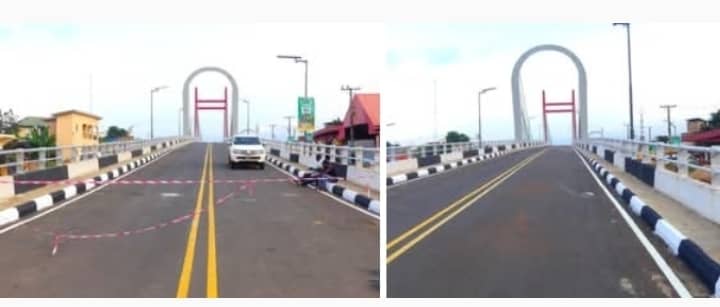
“Tony, I’m in Ekwulobia now,” he said, half-laughing, half-bewildered. “But I must confess, I can’t locate my way to Agulu. This new flyover has confused me. I can’t even see the old Ekwulobia Park.”
After a brief pause, he added—this time with unmistakable admiration—that the scale of change was impressive. By the end of the call, his verdict was clear: Governor Soludo is doing well.
That confusion—born not of decay but of development—was echoed by several Christmas returnees across the state.
At the Nwagu Agulu junction, motorists slowed to a crawl, peering left and right, struggling to reconcile memory with reality. Roads now stretch wider, intersections have been redesigned, and routes from Agulu to Nnewi and beyond wear a new look that startled even regular visitors.
“I left this place five years ago,” a returnee from Lagos remarked. “Honestly, it feels like another state entirely.”
Another motorist laughed as he pulled over to ask for directions: “If not for Google Maps, I would miss my own village.”
Many admitted that while the transformation initially unsettled them, it clearly signalled serious intent by the Soludo administration.
The Oko–Umunze axis tells a similar story. Roads linking the educational and agrarian hubs now flow more smoothly, cutting travel time and reshaping economic expectations.
A commuter plying the route described it as “a long-awaited relief from years of stress and vehicle damage.”
In Awka, the state capital, the impact is equally visible. From Ukwu Orji through inner-city roads around St. Faith’s Cathedral, to the Unizik Junction via Abakaliki Street, motorists encountered newly constructed and rehabilitated roads that left many pleasantly confused.
“I missed my turn because the road is too fine,” a commercial driver said, adding “This is not the Awka we used to know.”
Traders across these corridors spoke of easier access to markets, reduced travel time, and increased business activities.
“Customers now come more freely,” said a petty trader, Sunday Udorji, along one of the newly opened roads, quipping “Good roads bring life.”
Perhaps most encouraging for residents of the commercial nerve centre is the governor’s recent pronouncement to dualise the iconic 3-3 roads in the Onitsha axis of Anambra North Senatorial District. If delivered as promised, many believe it could redefine traffic flow, commerce, and urban life in the bustling corridor.
In this reporter’s diary, the takeaway from Christmas in Anambra is that progress can be disorienting—especially when it arrives at speed.
Governor Soludo’s road revolution has, quite literally, changed directions. It may have confused Christmas returnees, but it has also convinced many that something fundamental is happening.
As Anambra looks ahead, admirers urge the governor not to rest on his oars in the second term.
The oft-invoked Dubai–Taiwan vision—of efficiency, order, and prosperity—remains ambitious, but attainable if momentum is sustained.
For now, Christmas returnees may need a moment to find their way home. But if these roads continue to lead to growth, most seem willing to forgive the confusion.