Ofala: Obi of Onitsha Urges South-East Voters to Turn Out En Masse for 2027 Elections
Politics

By Tony Okafor, Onitsha
The Obi of Onitsha , Igwe Alfred Nnaemeka Achebe ( Agbogidi)
has charged the people of the South-East to turn out en masse for the 2027 general elections, warning that electoral apathy would only deepen the region’s political marginalisation and weaken its capacity to influence decisions affecting its future.
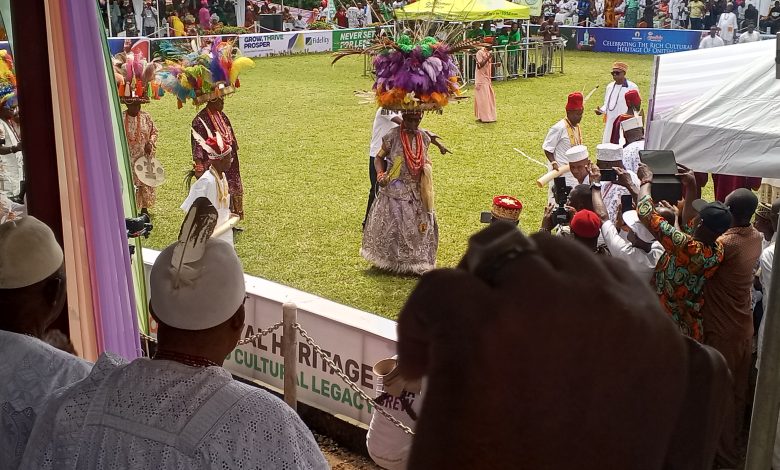
The monarch made the call on Friday during the celebration of this year’s Ofala Festival at Eze Chima Square, Onitsha, Anambra State.
The festival, themed “Oga n’Iru — Deliberate Progress,” also marked more than 500 years of the Onitsha monarchy.
Addressing the audience at the annual cultural celebration, the traditional ruler urged Ndi Igbo, particularly the people of the South-East, to take their civic responsibilities seriously by participating actively in the forthcoming elections.
With the 2027 general elections approaching, he said the people of the region could no longer afford to stay away from the electoral process while complaining about marginalisation and inadequate representation.
“Still on the national elections, I call on the people of the South-East States to shake off their historical apathy towards elections. We cannot stay away from elections and turn around to complain of marginalisation. In democracy, all votes count. Therefore, we must come out and vote for our candidates,” the monarch said.
He also called on the Independent National Electoral Commission (INEC) to ensure free, fair and credible elections, stressing that the integrity of the electoral process was essential to strengthening public confidence in democracy.
The monarch’s message placed political participation at the centre of his broader appeal for deliberate progress, collective responsibility and a renewed commitment to the development of the South-East.
Beyond the electoral message, the Obi expressed concern over Nigeria’s worsening economic and security challenges, noting that the difficulties confronting ordinary citizens had become increasingly severe.
Reflecting on his 2024 Ofala address, the monarch recalled that the preceding months had been marked by uncertainty.
He observed that the wellbeing of Nigerians had deteriorated further, with more people pushed below the poverty line.
Citing a World Bank update referenced in his address, he said about 104 million Nigerians had been classified as poor in 2023, adding that persistent insecurity in several parts of the country had compounded the situation.
He urged the Federal Government to prioritise the welfare of the poorest and most vulnerable citizens, warning that hunger, unemployment, inadequate healthcare and insecurity continued to undermine human development.
The monarch also referred to concerns raised by the Catholic Bishops Conference of Nigeria during a visit to President Bola Tinubu on July 28, 2026, particularly over national security and the economic hardship facing the majority of Nigerians.
He appealed to the President to give urgent attention to the challenges confronting citizens, arguing that the issues transcended political, religious and ethnic considerations.
According to him, the country’s leadership must focus on governance and practical solutions rather than political positioning, especially as the next general elections draw closer.
The Obi of Onitsha further urged political parties and their candidates to embrace peaceful, issue-based campaigns capable of helping voters make informed decisions in 2027.
He called on traditional rulers, religious institutions, town unions and civil society organisations to intensify public enlightenment and mobilisation in support of credible elections.
While acknowledging reports of violence and intimidation during recent off-cycle elections, he cited the governorship election in Osun State as an indication of the importance of voter participation and the electoral commission’s performance.
He maintained that elections should provide citizens with an opportunity to choose leaders capable of delivering effective governance, rather than becoming occasions for violence, intimidation and divisive political rhetoric.
The monarch’s appeal comes amid growing expectations that the 2027 elections will shape the country’s political direction and determine the priorities of the next administration.
For the South-East, he suggested, greater participation in the electoral process was necessary to strengthen the region’s democratic voice and advance its interests within the Nigerian federation.
The 2026 Ofala theme, “Oga n’Iru — Deliberate Progress,” provided the philosophical foundation for the monarch’s message on political participation, community development and resilience.
Explaining the significance of the theme, he noted that it followed a succession of themes reflecting the values that had sustained the Onitsha people through changing social and economic circumstances.
The 2023 theme, “Better. Together. Stronger,” emphasised consolidation and collective strength, while the 2024 theme, “Courage. Perseverance. Self-reliance,” encouraged determination in the face of hardship.
Last year’s theme, “Njiko na Ntachi: Community Resilience,” highlighted the importance of unity and the preservation of enduring communal values.
According to the monarch, the themes reflected the attributes of the founding fathers of Onitsha, whose migration from the lands of Ado and Idu and subsequent settlement in their present homeland required determination, courage, unity and self-reliance.
He recalled the visionary leadership of Eze Chima, whom he credited with overcoming the challenges of migration and establishing the foundation of the Onitsha kingdom.
The monarch said each generation had a responsibility to preserve the heritage bequeathed by its forebears and hand it over to future generations in better condition.
Against the backdrop of the country’s economic difficulties, he argued that the Onitsha people must draw strength from their history rather than rely entirely on government intervention.
He urged Ndi Onicha to summon the enduring qualities that had sustained their ancestors through difficult periods, insisting that the community must continue to strive for progress while preserving its dignity and cultural identity.
Community development takes centre stage
The address also reviewed the activities of the Onitsha Advancement Foundation (ONAF), a community development initiative established to drive programmes aimed at improving the welfare of the people.
The monarch said that, after five years of operation, there was a need for a comprehensive review of the foundation’s achievements, processes and overall impact.
He explained that the proposed review would help reposition the organisation, strengthen its programmes and identify areas requiring improvement to achieve greater results.
Among the foundation’s notable activities during the year was a study sponsored by the Ford Foundation on gender-based violence in the community, with particular attention to what the address described as the “culture of silence” surrounding victims.
The monarch said the study examined the challenges confronting victims and the need for stronger prevention strategies, adding that its findings and recommendations would be presented as part of the wider community development agenda.
He also identified the sustained failure of some loan beneficiaries to repay their loans as one of the foundation’s setbacks, highlighting the need for greater accountability in community-based development programmes.
The review, he said, would provide an opportunity to assess past performance and establish a stronger framework for future interventions.
This year’s Ofala Festival carried added historical significance, celebrating more than 500 years of the Onitsha monarchy and its enduring place in the cultural identity of the people.
Beyond its ceremonial splendour, the annual festival served as a platform for the monarch to address issues of public importance, reflect on the kingdom’s heritage and outline priorities for community development.
The celebration brought together traditional institutions, community leaders and other guests for an event that combined cultural expression with reflections on governance, economic welfare and the future of the kingdom.