By Tony Okafor
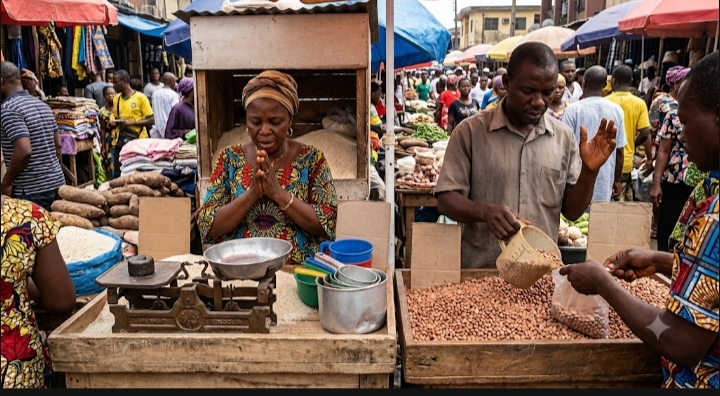
Walk through virtually any major market where Christians ply their trade and, at certain hours of the day, you are likely to encounter traders stopping their businesses to pray.
In some places, bells are even rung to announce the prayer hour. Heads bow, voices rise and, for a few moments, the market becomes a place of worship.
But one cannot help asking: what happens after the prayers?
How can a trader lift his hands to God in prayer and, shortly afterwards, use a half-measure cup to short-change a customer? How does a Christian pray for God’s blessings and then deliberately overprice an item to maximise profit? What does it mean when someone invokes God’s name, or even swears, while engaging in dishonest business?
Christianity cannot be reduced to prayers, “morning cry evangelism”, hymns, church attendance or the outward rituals of religion. The real test of faith is often what a person does when no one is watching — especially when there is an opportunity to cheat and make extra money.
One wonders whether those who engage in such practices are the same Christians who throng churches on Sundays and other days of the week, singing hymns with voices that sound angelic, listening to sermons and, in some cases, receiving Holy Communion — the Body and Blood of Christ.
If our prayers do not influence the way we treat our customers, neighbours and fellow human beings, then what exactly are we praying for?
The Bible says in James 2:17 that “faith without works is dead.”
Our markets need better attitudes that translate into honest scales, accurate measurements, fair prices and truthful dealings more than they need rote prayers.
For the Christian trader, the market itself should be another altar — and every customer should be treated as a fellow human being, not as an opportunity to cheat.
Christianity should be a signpost to Christ — a living expression of uberrimae fidei – utmost good faith.