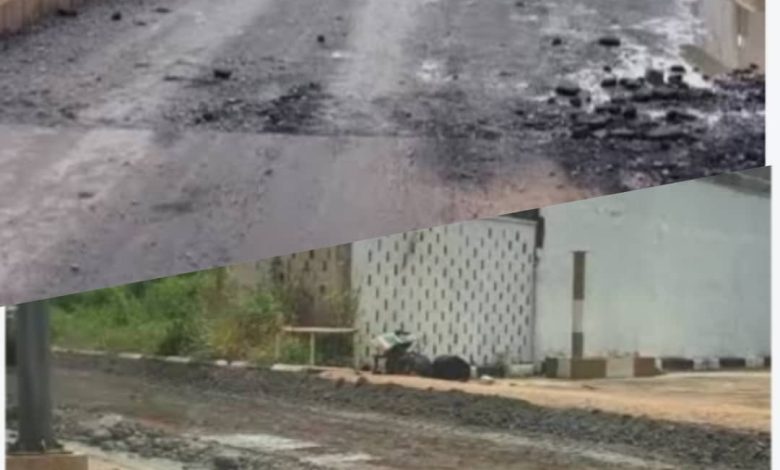
The Amawbia–Agulu–Ekwulobia–Uga road was expected to transform transportation and commerce in Anambra State.
Its dualisation was celebrated as a flagship achievement. Today, however, sections of the road are reportedly being stripped of freshly laid asphalt and rebuilt. The spectacle is shameful.
The Agulu–Nnewi dual carriageway and portions of the Nnewi–Ozubulu–Okija corridor have also featured in reports of remedial works. Scraping fresh asphalt off a supposedly new road is not engineering excellence; it is waste dressed up as work.
There is something deeply troubling about a road that looks brand-new today but begins to resemble an abandoned relic tomorrow.
Such premature deterioration raises serious questions about the quality of materials, workmanship and supervision.
A failure of this magnitude so soon after construction demands answers. It is difficult to escape the suspicion that corners may have been cut in contract execution, design, construction or regulatory oversight.
A properly designed and constructed road should not require extensive remedial work within months of completion.
The government has blamed heavy rainfall, flooding and underground water. While these explanations may hold some merit in particular locations, they are not enough.
Roads in Anambra must be designed for Anambra’s rainfall, soil conditions and water table. If the design failed to anticipate the state’s climate, the design failed. If the contractor used substandard materials, the contractor failed. If supervision was inadequate or compromised, the supervising authorities failed.
Let us be blunt: no excuse can convince Ndi Anambra that this build-and-scrape cycle is acceptable. Not rain. Not flooding. Not soil conditions. Not the pressure to commission projects. And certainly not politics.
A government that understands its terrain cannot continue building roads that fail to withstand its weather.
Even where contractors undertake repairs at no direct additional cost to the state, the losses remain real. Public funds have already been expended on the original construction. Reconstruction consumes materials, machinery, labour and valuable time. Motorists endure diversions, damaged vehicles, delays and renewed safety hazards.
Meanwhile, government officials and equipment are tied down correcting yesterday’s failures instead of delivering tomorrow’s projects. The state pays, even when the bill is not immediately visible.
A road is not a campaign poster. Its success cannot be measured merely by kilometres announced, asphalt laid or commissioning photographs circulated. It must be measured by durability, safety and value for money.
A road that requires extensive reconstruction within months has failed, regardless of how pristine it appeared on commissioning day.
Governor Chukwuma Soludo must therefore act—and act openly. He must order transparent, independent investigations into the affected roads and publish the findings.
Where poor workmanship or substandard materials are established, the contractors responsible must face the full consequences. Where designs failed to account for drainage, soil conditions or the water table, the supervising engineers and approving authorities must also answer.
There must be no cover-ups, no quiet settlements and no convenient shifting of blame to the weather.
Anambra does not deserve a revolving door of road construction: build, fail, scrape and rebuild.
The governor’s legacy should not be defined by the speed with which roads are constructed and commissioned, but by the confidence with which Ndi Anambra can travel on them years later.
Public money must build lasting infrastructure, not repeatedly finance avoidable mistakes.