Obi Links Poor Human Development to Education Neglect, Calls for Broader Funding Framework
News

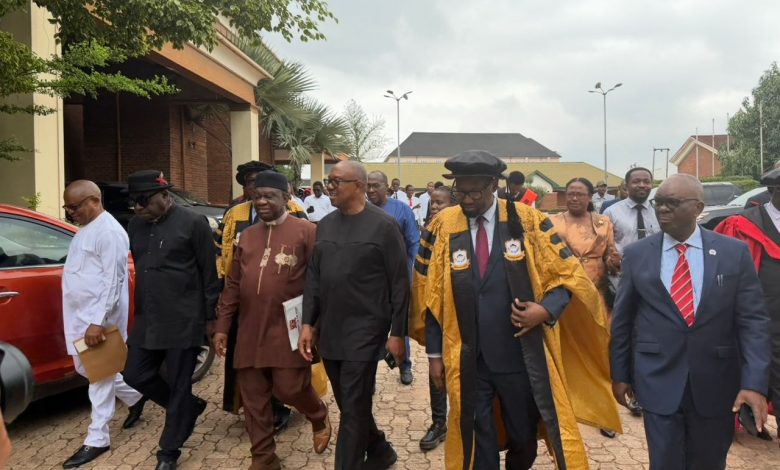
Former presidential candidate, Mr. Peter Obi, has called for urgent reforms and stronger collaboration between government, private sector, and academia to reposition Nigeria’s education sector for national growth and global competitiveness.
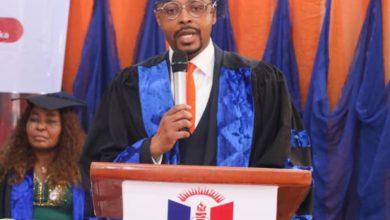
Obi made the call while delivering a lecture titled “Repositioning Nigeria’s Education Sector Through Private Partnership for National Growth and Global Competitiveness” at Coal City University. He stressed that no nation rises above the quality of its education system, noting that Nigeria’s future will be determined more by the strength of its classrooms, laboratories, and research institutions than by natural resources or political rhetoric.
He decried the persistent challenges facing the sector, including chronic underfunding, inadequate infrastructure, outdated curricula, and weak linkage between education and industry. Citing global standards set by UNESCO, Obi noted that Nigeria allocates less than 7% of its national budget to education, far below the recommended 15–20%. He warned that this has contributed to youth unemployment and underemployment exceeding 30%, as well as a widening gap between graduates’ skills and labour market needs.
Obi also called for stronger government support across all tiers of education, questioning the limited scope of interventions by the Tertiary Education Trust Fund (TETFund). He wondered why such interventions are not extended to private universities, noting pointedly that they educate Nigerian students just like public institutions. “Do students in private universities come from another planet?” he asked, arguing that a more inclusive support framework would strengthen the entire education ecosystem.
Obi linked these challenges to Nigeria’s poor human development outcomes, referencing data from the United Nations Development Programme, which ranks the country 161 out of 193 nations on the Human Development Index (HDI), with a score of 0.548. He said the ranking reflects deep structural weaknesses in education, health, and living standards, adding that Nigeria’s life expectancy—estimated at about 50 to 55 years—remains significantly below global averages due to weak healthcare systems and limited access to quality medical services.
Drawing comparisons, Obi noted that countries such as Indonesia and Egypt, with HDI levels around 0.73–0.74, have made stronger progress through sustained investment in education, healthcare, and human capital development. He added that South Africa, with an HDI of about 0.71–0.72, remains one of the continent’s leading performers due to relatively stronger institutions and greater investment in education and health, despite ongoing inequality challenges.
He further highlighted disparities in education funding, noting that South Africa’s 2026 education budget stands at approximately $30 billion for a population of about 65 million, while Nigeria, with over 200 million people, allocates an estimated $2.5 billion annually. Obi described this as “funding starvation,” stating that the gap has contributed to low productivity, high unemployment, and the continued migration of skilled professionals.
According to him, Nigeria’s literacy rate, estimated between 59% and 69%, remains inadequate for a knowledge-driven economy. He emphasised that education, health, and productivity are closely linked, warning that weak education systems often translate into poor health awareness, lower life expectancy, and reduced economic output.
Obi argued that government alone cannot fund and modernise the education sector, identifying weak collaboration between academia and industry as a major constraint. He advocated Public-Private Partnerships as a critical solution, stating that such collaborations can drive infrastructure development, support research, reform curricula, and create employment pathways through internships and apprenticeships.
He called for increased investment in education and healthcare, curriculum reforms aligned with industry needs, expanded research and innovation funding, and stronger emphasis on skills acquisition and entrepreneurship. He also urged the private sector to view investment in education as a strategic necessity for national stability and economic growth.
In their remarks, the Vice-Chancellor, Prof. Adam Icha Ituma, and the Chairman of the occasion, Prof. Chinedu Nebe, described Obi’s presentation as timely and thought-provoking, urging stakeholders to act on the issues raised.
Obi concluded that Nigeria’s problem is not a lack of talent but a failure of alignment, investment, and partnership, stressing that repositioning the education sector is fundamental to achieving sustainable development and global competitiveness.