By Tony Okafor, Awka
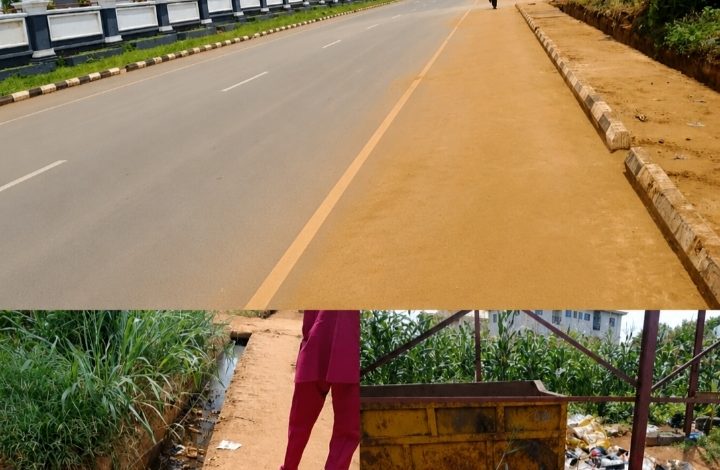
There are sights that tell a story without uttering a word. The photographs accompanying this diary tell one such story.
On one side stands the impressive, multi-billion-naira newly built Anambra State Government White House in Awka, a monument that speaks of government investment, modernity and the ambition to give the state a befitting administrative capital. On the other side, almost mocking that grandeur, is an ugly and filthy spectacle of refuse, a filthy drainage channel, overgrown vegetation and an overflowing waste container.
The contrast is simply jarring.
For any visitor entering Awka and approaching the Government House axis, this is hardly the postcard image one expects to see. Instead of being greeted by a clean, orderly and aesthetically pleasing environment befitting the capital of a state that prides itself on development, the visitor is confronted with what looks like an abandoned refuse dump.
This is not merely about aesthetics. It is about public health, environmental responsibility and the credibility of government policies.
The irony is difficult to miss. The Anambra State Government, through its Ministry of Environment, has consistently preached cleanliness and environmental discipline. The Awka Capital Territory Development Authority (ACTDA) has also been at the forefront of efforts to make Awka cleaner, better planned and more attractive. The Awka South Local Government Area equally has a critical responsibility in maintaining environmental sanitation.
Yet, right in the vicinity of one of the state’s most important and expensive government edifices, this ugly spectacle persists.
How do we preach cleanliness to citizens when the environment around government infrastructure tells another story?
There is an old saying that if an object smells, it is taken to the river for washing. But what happens when the river itself smells?
That is the bigger question for Anambra. If government agencies responsible for environmental sanitation cannot keep the surroundings of a top government infrastructure clean, what moral authority do they have to lecture residents, traders, businesses and communities about environmental responsibility?
The photographs raise basic questions: Who owns this refuse? Who is responsible for this environment? Who is supposed to clean it, and how long has it been allowed to remain this way?
A multi-billion-naira Government House deserves an environment that reflects its value. Government buildings should demonstrate the standards government wants citizens to emulate.
Anambra has made significant investments in infrastructure, but infrastructure without environmental discipline creates a disturbing paradox: a beautiful building sitting in an ugly environment.
This should therefore not be dismissed as just another heap of refuse. It is a challenge to the Ministry of Environment, ACTDA, Awka South Local Government and every agency responsible for keeping Awka clean.
Government must clean its doorstep before asking citizens to clean theirs.
For a state that wants to be known for excellence, this is one eyesore that should disappear—and quickly too..