Survivors Recount Horrors of Alleged Torture, Starvation, Deaths at Wawa Barracks Under Buhari Regime – Ejiofor


By Titus Eleweke
“Calls for Release of Igbo Youths Still Detained Without Evidence, Withdrawal of Charges”
Survivors of alleged enforced disappearances and prolonged detention at the Wawa Barracks facility have recounted horrifying experiences of physical torture, psychological trauma, starvation, denial of medical attention and deaths, allegedly suffered by predominantly young Igbo men under the administration of former President Muhammadu Buhari.
The survivors’ accounts, according to a prominent Anambra-born human rights lawyer and lead counsel to the Indigenous People of Biafra (IPOB), Sir Ifeanyi Ejiofor, have exposed the disturbing conditions under which several detainees were allegedly held at the detention facility, raising fresh concerns about human rights violations, ethnic profiling and the abuse of state security institutions.
Ejiofor who holds traditional title of Dunu-Ezeugosinachi alleged that the massive crackdown on Igbo people, particularly youths, young fathers and mothers, during the Buhari administration was presented to the public as a legitimate campaign against violent crimes and terrorism, whereas, in his view, it was driven by unresolved historical animosities and deep-seated ethnic prejudices.
The lawyer in his Monday commentary said the recent testimonies of survivors had revealed the horrifying dimensions of what allegedly transpired at the Wawa Barracks detention facility, where detainees were subjected to excruciating physical torture, psychological and emotional trauma, deliberate denial of medical attention and, in several cases, death.
The Anambra-born human rights lawyer further alleged that some detainees were made to survive on nothing more than a single cup of garri and water, which they were scarcely provided even once in several days.
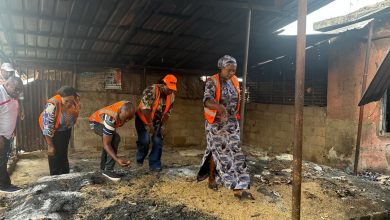
Ejiofor said the situation deteriorated from appalling to catastrophic before a change of leadership within the Service under the administration of President Bola Tinubu reportedly ushered in sweeping reforms at the facility.
He listed the measures as including the overhaul of the detention facility, the release of detainees against whom no indictments could be sustained, continued profiling of those still in custody, payment of compensation without the compulsion of court orders and the transfer of a significant number of detainees to conventional custodial facilities.
He lamented that the situation had at some point deteriorated to the extent that some unscrupulous individuals of Igbo extraction allegedly exploited the security apparatus to settle personal scores.
According to him, the development further compounded the suffering of innocent citizens and undermined public confidence in security institutions.
“Indeed, the situation at some point degenerated to such an alarming extent that some unscrupulous individuals of Igbo extraction weaponised the security apparatus as an instrument for settling personal scores,” he said.
Ejiofor expressed hope that the dark chapter had ended, restoring confidence, peace and a measure of security in the South-East.
He recalled the anguish of families whose loved ones were allegedly taken away from their homes in the dead of night on account of ethnic profiling, without any information about their whereabouts.
Ejiofor said such incidents left families wandering endlessly between anguish and uncertainty, not knowing whether their loved ones were alive or dead.
” I am particularly devastated and profoundly appalled by the sheer wickedness visited upon the Igbo people under the former leadership of the Service. It was an unconscionable descent into institutional cruelty. We lost our people in their hundreds, thousands and numbers too horrifying to quantify,” he stated.
However, the lawyer was quick to distinguish his criticism of alleged security abuses from any attempt to justify criminal activities by armed groups operating in the South-East.
He stressed that his intervention should not be interpreted as an endorsement or moral justification of the activities of criminal elements who, under the guise of self-acclaimed liberators, had subjected the region to violence and intimidation.
“No grievance, however genuine, confers a licence for criminality; equally, no allegation of criminality confers a licence for lawlessness by the State,” he declared.
He also called for the immediate withdrawal of charges still pending against detainees whose prosecution, he alleged, was founded on malicious and prejudicial ethnic categorisation rather than credible evidence of criminal conduct.
The lawyer argued that addressing the underlying causes of agitation in the South-East was more important than sustaining what he described as an unproductive fixation on ethnic profiling.
He maintained that genuine security management required professionalism, justice and a proper understanding of the grievances fuelling discontent, rather than propaganda and indiscriminate arrests.
“You do not cure an ailment by endless debating the identity of the patient. Addressing the root causes of the agitation is far more imperative than sustaining an unproductive fixation on ethnic categorisation,” he said.
He further commended Ajayi for what he described as his reform-oriented leadership, expressing confidence that the ongoing changes would be remembered by generations yet unborn.
“History is an impartial recorder; it neither forgets the cruelty of the wicked nor denies honour to those who choose the path of justice,” he added.
Turning his attention to the Igbo people, Ejiofor called for sober reflection, urging the people not to allow the alleged injustices suffered in the past to deepen internal divisions or provide opportunities for unscrupulous individuals to exploit their collective misfortune for personal vendettas.
He warned that failure to learn from past experiences could expose the people to repeated mistakes and further weaken their collective interests.
“A people who fail to learn from yesterday’s wounds risk becoming prisoners of tomorrow’s mistakes,” he cautioned.
Ejiofor said the alleged abuses and erosion of public confidence in security institutions could only be reversed through professionalism, institutional reforms and strategic leadership.
He argued that while violence, intimidation and enforced disappearances could destroy public confidence, rebuilding it required uncommon courage, accountability and commitment to justice.
“What brute force could not sustain, enlightened leadership is beginning to accomplish. Indeed, it takes no genius to destroy public confidence; it takes uncommon courage and professionalism to rebuild it,” he said.