By Our Correspondent
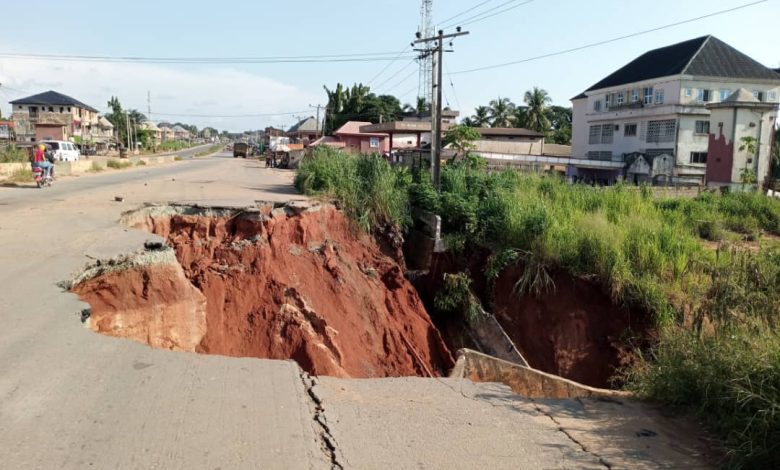
A Nigerian building construction and consultancy company, the Sliding Towers Global Ltd, has attributed the incessant flooding in various parts of the country to the failure of the authorities to adhere strictly to building and urban planning standards.
In a statement in Awka, the company observed that flooding has become one of the recurring images of Nigeria’s rainy season, noting that while the rain may trigger the crisis, the scale of the damage often begins with decisions made long before the first drop falls.
Describing 2026 as particularly significant in terms flooding, the company recalled the Nigeria Hydrological Services Agency’s annual flood outlook which identified 14,118 communities across 266 Local Government Areas in 33 states and the Federal Capital Territory as high-risk flood areas.
“Every rainy season, the images return. Roads disappear beneath water. Cars stall. Homes are submerged. Businesses shut their doors and entire neighbourhoods become temporarily inaccessible.
“Yet rainfall alone does not explain why one storm passes relatively unnoticed while another becomes a disaster. The answer is often on the ground.
“Natural waterways are built over. Wetlands disappear beneath development. Compounds are almost completely paved. Drainage channels become blocked or undersized. New buildings are inserted into the landscape with little consideration for how water naturally moves through it.
“Flooding, therefore, is not simply a drainage problem; it is also a question of planning, architecture and the way we build our cities. And that means flood resilience should begin much earlier than the emergency response.
It should begin on the drawing board”, the company said.
According to Sliding Towers, good architecture does not simply occupy land, but responds to it, advising that before deciding where a building sits, architects and developers should understand the topography of the site, existing drainage paths, soil conditions and potential flood exposure.
The statement read: “In vulnerable areas, relatively straightforward decisions can make an enormous difference. Finished floor levels can be raised. Entrances can be protected from direct runoff. Electrical equipment, generators and other critical services can be positioned above likely flood levels.
“Water needs somewhere to go. When almost every surface becomes impermeable, rainfall that would once have soaked gradually into the ground is rapidly converted into runoff and directed towards already stressed public drains.
“Permeable paving, planted areas, rain gardens, landscaped depressions and rainwater harvesting can all become part of the architecture of a development. Roof water can be collected and reused, while site levels can be designed to slow and safely direct excess runoff.
“Flood resilience does not mean putting every Nigerian building on stilts. It means designing each building according to the realities of its site. The principle is more important than any particular solution. Buildings should be designed with water in mind; not designed first and defended from water afterwards
Sliding Towers reminded Nigerians that good drainage simply means constructing more concrete channels because no drainage network performs well when every roof, driveway, road and paved compound sends water into it at the same time.
“A well-designed house is still vulnerable when the street outside is under water. A carefully drained office building cannot function when the surrounding road network becomes inaccessible. Flood resilience must therefore operate at four scales namely, the building, the street, the neighbourhood and the city.
“Natural drainage corridors need protection. Wetlands should not automatically be treated as empty land awaiting development. A park, for example, can remain a recreational space for most of the year while temporarily receiving storm water during severe rainfall”, it said.