By Tony Okafor, Awka
Presidential aspirant of the Nigeria Democratic Congress (NDC), Peter Obi, has intensified efforts to protect Nigerians living in South Africa following renewed reports of xenophobic attacks and rising depression among victims.
Obi disclosed this in a Facebook post on Saturday, where he outlined a series of high-level engagements with South African government officials and political party leaders.
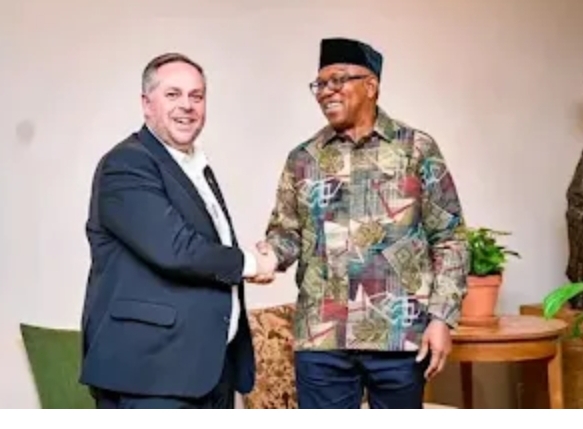
“After speaking with Nigerians in Cape Town yesterday, I was able to have meaningful discussions this morning with three South African ministers and political party leaders regarding the ongoing challenges related to immigration, regional collaboration, and fostering peaceful coexistence,” Obi wrote.
He revealed that he met with Mr Leon Schreiber, South Africa’s Minister of Home Affairs and a leading figure in the Democratic Alliance; Mr Velenkosini Hlabisa, Minister of Cooperative Governance and Traditional Affairs and leader of the Inkatha Freedom Party (IFP); and Mr Gayton McKenzie, Minister of Sports, Arts and Culture and leader of the Patriotic Alliance (PA).
Obi described the discussions as “productive and candid,” focusing on migration, economic pressures, youth unemployment, security concerns, and the growing tensions faced by African foreigners in South Africa.
He stressed that Nigeria and South Africa, as two of Africa’s leading nations, must deepen dialogue and pursue solutions anchored on justice, mutual respect, and the rule of law.
“In challenging times, leaders and citizens alike need to demonstrate responsible leadership, compassion, and restraint,” he said.
The talks also underscored the need for law-abiding conduct, rejection of violence and hate, and reliance on lawful institutions to resolve grievances through democratic processes.
“The progress of Africa hinges on our ability to build unity, promote economic inclusiveness, invest in our communities, and uphold the dignity of every African, regardless of where they live,” Obi added.
Meanwhile, Obi’s intervention has drawn commendation from observers and civil society voices. A Johannesburg-based Nigerian community leader, Mr Chinedu Amandi, described the move as “timely and courageous,” noting that “it sends a strong message of solidarity to Nigerians facing fear and uncertainty.”
Similarly, South African political analyst Ms Lenrato Mbeiki praised the engagement, saying it reflects “the kind of proactive diplomacy needed to reduce tensions and prevent further escalation.”