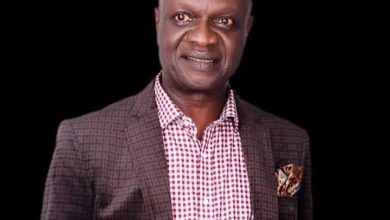
By Emeka Monye
Nigeria stands at a crossroads. Sixty-five years after independence, the question of how we govern ourselves remains unresolved. We run a federal system in name, but in practice, we operate a heavily centralised, unitary structure where power, resources, and institutions all gravitate toward Abuja. The result is a state that feels distant to most citizens, a bureaucracy that stifles initiative, and a federation where development is uneven and often accidental.
What if we rethought this? What if Nigeria’s administrative structure was genuinely decentralised, with federal institutions deliberately spread across the country? It is not a radical idea. It is a practical one, tested in other federations that had to manage diversity, geography, and competing regional interests. For Nigeria, decentralisation could be the missing link between political unity and economic growth.
At independence in 1960, Nigeria adopted a parliamentary system with a federal structure that gave regions substantial control over their affairs and resources. The North, West, and East each had their own civil service, judiciary, and economic policy space. Regions produced for themselves and contributed to the centre. The Western Region’s cocoa, the Northern Region’s groundnuts, and the Eastern Region’s palm produce funded education, infrastructure, and industrial projects that are still remembered today.
The British, who designed this system, understood Nigeria’s peculiarities. This was not a homogeneous state. It was, and still is, a federation of nationalities with different histories, languages, and economic bases. The structure allowed competition and cooperation. Each region had an incentive to develop its comparative advantage because the proceeds stayed largely at home.
That changed after the 1966 coup. Power was moved to the centre. By the end of the civil war, Nigeria had become a unitary state administered from Lagos, and later Abuja. Military rule entrenched centralisation. Oil revenues flowed into federal coffers, and the states became dependent on monthly allocations from Abuja.
Today, everything is centred on one location: the executive, legislature, judiciary, police, army, navy, air force, immigration, customs, and dozens of federal agencies all have their headquarters in Abuja. The logic was security and administrative convenience. The consequence has been over-concentration, congestion, and a neglect of the federating units.
A centralised system made sense in a military era when command and control were prioritised. In a democracy, it creates bottlenecks. Decisions take longer because they must be referred to Abuja. Federal presence in the states is thin, limited to a few offices and institutions that often lack autonomy.
This structure does not promote balanced geographical and infrastructural development. When every major agency is in one city, capital investment, skilled labour, and economic activity follow. Abuja has grown rapidly, but many state capitals struggle with basic infrastructure. Young graduates migrate to Abuja and Lagos for opportunities, leaving other regions underdeveloped and underutilised.
Centralisation also breeds a sense of alienation. Citizens in Sokoto, Calabar, or Maiduguri experience the federal government as an abstract entity that collects revenue but is rarely seen or felt locally. Governance feels remote, and accountability suffers. When everything is done at the centre, the centre becomes a bottleneck and a target for rent-seeking.
We do not need to invent a model from scratch. Other diverse federations have solved this problem by decentralising federal functions.
Take South Africa. It has three capital cities. Pretoria is the administrative capital and seat of the executive. Cape Town houses Parliament. Bloemfontein is the judicial capital and home to the Supreme Court of Appeal. Johannesburg, the commercial capital, is not a political capital but drives the economy from Gauteng province. This distribution means that government activity, infrastructure, and expertise are spread across the country. No single city bears the full weight of federal presence, and no region feels completely left out.
The United States does the same, though less formally. Washington, D.C. is the political capital, but the Pentagon is in Arlington, Virginia. The Federal Reserve is in Washington, but major financial activity is in New York. Federal courts, military commands, and agencies are spread across states. This distribution creates multiple centres of expertise and economic activity, and it gives citizens across the country a sense that the federal government is not abstract or distant.
These countries did not do this by accident. They designed it to manage diversity, reduce congestion, and foster national integration. The principle is simple: if you spread the institutions of the state, you spread opportunity and a sense of belonging.
Nigeria can apply the same principle to fit its own geography and politics. The goal is not to weaken the federal government, but to make it more effective and more visible across the federation.
The executive arm can remain in Abuja as the political and administrative capital. That preserves continuity and the symbolic role of the Federal Capital Territory.
The legislative arm could be relocated to Enugu. The old Eastern Region capital has the infrastructure, history, and central location to host the National Assembly. It would decongest Abuja and stimulate economic activity in the South East and beyond.
The judiciary could be based in Ibadan. As the largest city in West Africa by landmass and a historic centre of law and education, Ibadan is well positioned to host the Supreme Court and Court of Appeal. It would bring legal services and related industries closer to the South West and the wider country.
Military and security institutions should also be dispersed. Army Headquarters can be based in Kaduna, its traditional home. Naval Headquarters belongs in Port Harcourt, a coastal city with maritime infrastructure. Air Force Headquarters could move to Jos, leveraging the plateau’s geography and existing air force presence.
Other agencies can follow the same logic. Immigration and customs should be closer to borders and ports. Customs could have a major headquarters in Sokoto to manage the northern corridor, while immigration could have a strong presence in Lagos, the country’s main entry point. The Nigeria Security and Civil Defence Corps could be headquartered in Delta or Edo, given the security challenges in the Niger Delta. The Nigeria Police Force can retain its headquarters in Abuja for coordination, but regional commands should have greater autonomy and resources.
This is not about creating 36 capitals. It is about creating multiple hubs of federal activity so that development, expertise, and employment are not concentrated in one place.
First, decentralisation would drive balanced development. When a federal institution moves to a city, it comes with infrastructure, housing, transport links, and a skilled workforce. Ibadan, Enugu, Port Harcourt, and Kaduna would all see accelerated growth, reducing pressure on Abuja and Lagos.
Second, it would improve governance and accountability. Agencies closer to the regions they serve respond faster and are more accessible to citizens. A customs office in Sokoto understands the challenges of the northern border better than one in Abuja. A naval command in Port Harcourt can respond quicker to maritime security threats in the Gulf of Guinea.
Third, it would strengthen national unity. One of the recurring complaints in Nigeria is that some regions feel excluded from the federal structure. When people see federal institutions and opportunities in their own region, the idea of Nigeria becomes more real and more personal. It gives every part of the country a stake in the centre.
Fourth, it would reduce the cost of governance. Abuja is expensive. Rent, land, and living costs are driven up by the concentration of government and private sector activity. Spreading institutions would lower costs and allow for more efficient use of public funds.
Decentralisation will not be easy. There will be political resistance from those who benefit from the status quo. Moving institutions costs money and requires planning. Some will argue it will create inefficiency or duplication.
But these are management problems, not impossibilities. The transition can be phased over 10 to 15 years. New buildings and infrastructure can be constructed gradually, tied to existing capital budgets. Staff can be relocated with incentives. Technology can reduce the need for physical movement for many functions.
The bigger challenge is political will. It requires leaders at the federal and state levels to think beyond the next election cycle and see the long-term benefit of a more balanced federation. It requires the National Assembly to amend the constitution where necessary and to approve the relocation of institutions.
Nigeria’s current structure was designed for military rule, not for a diverse democracy in the 21st century. We cannot expect different results if we keep running the same centralised system and hope for decentralised development.
Decentralising administrative functions is not a threat to unity. It is how you make unity work. When people across the country see the federal government in their cities, when they can access federal services without travelling to Abuja, when their regions become hubs of economic activity, they will have a reason to defend and invest in the Nigerian project.
The British understood this in 1960. South Africa and the United States practice it today. Nigeria can too.
The executive can stay in Abuja. The legislature can move to Enugu. The judiciary can sit in Ibadan. The army in Kaduna, the navy in Port Harcourt, the air force in Jos. Customs in Sokoto, immigration in Lagos, civil defence in Delta.
This is how you build a federation where every part feels included, where development is not an accident, and where governance is closer to the people.
A decentralised Nigeria is not just possible. It is necessary if we want a country that works for all its people.
*Emeka Monye Is A Journalist*