By Our Correspondent
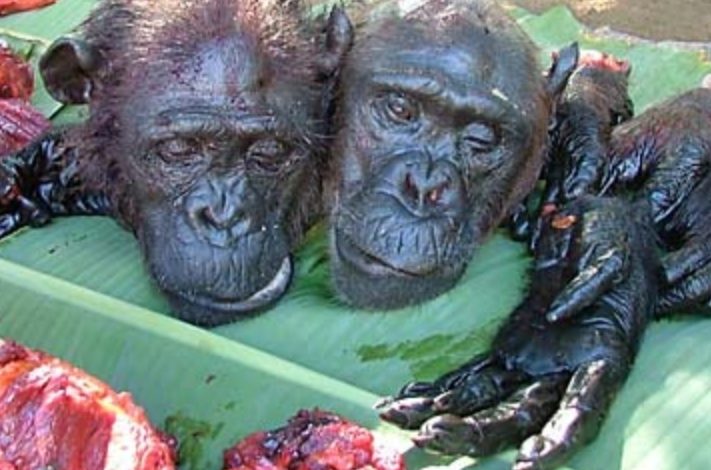
Drama erupted at Eke Awka Market in Awka, Anambra State, when a group of women reportedly stormed a trader’s shop and confronted her over the display and sale of dried monkey meat, including monkey heads.
The women, said to be indigenes of Awka, reportedly took exception to the presence of the monkey parts in the shop, insisting that they had no place in the town’s central market.
The dramatic encounter was captured on video and has since gone viral on social media, triggering heated reactions from members of the public.
The identity of the trader could not immediately be established. She was, however, reportedly an Ezenwaanyị—a female traditional practitioner—and several of the items displayed in her shop appeared to be traditional or sacrificial materials.
In the video, the women were seen angrily demanding that the trader remove the monkey parts from her shop.
They reportedly told her that killing or eating monkeys was forbidden in Awka, insisting that the practice amounted to a taboo and an abomination in the town.
Their objection was anchored on the long-standing Awka cultural belief captured in the popular expression, “Awka na-asọ enwe”—loosely translated as “Awka does not eat monkeys.”
For generations, the expression has been associated with Awka’s cultural identity, with many indigenes still holding firmly to the belief that monkeys should neither be killed nor eaten.
According to the women, monkeys occupy a special place in Awka’s history.
They claimed that, in ancient times, monkeys alerted members of the community whenever enemies or invaders approached, earning the animals a measure of protection and reverence among the people.
The women further claimed that they had previously warned the trader against selling the forbidden items in the market.
But apparently dissatisfied that the warning had been ignored, they descended on the shop and demanded their immediate removal, threatening to report the matter to the market leadership.
The trader initially resisted, leading to a heated exchange with the women.
But as the pressure mounted, she eventually removed the monkey parts from the shop.
The confrontation did not end there.
The trader reportedly warned the women against posting the video of the encounter on social media, but the women insisted on doing so.
The video eventually surfaced online, where it generated a fresh round of arguments over culture, tradition and individual freedom in a modern commercial environment.
While some social media users backed the women, arguing that the sale of monkey meat in Awka offended the town’s cultural sensibilities, others questioned the propriety of enforcing traditional customs on traders in a contemporary marketplace.