Say it anywhere, Governor Chukwuma Charles Soludo deserves commendation for the massive road construction undertaken by his administration, particularly during his first tenure.
Across Anambra State, new roads have improved connectivity, opened up communities and eased the movement of people and goods.
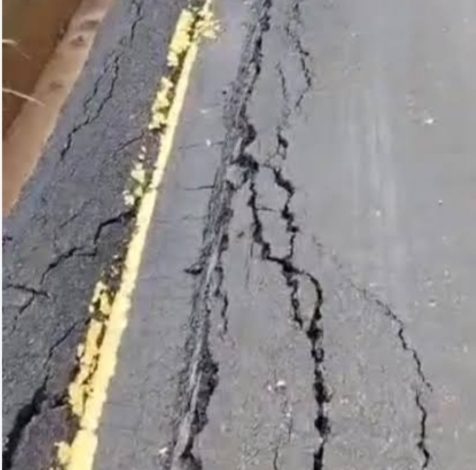
However, the growing public outcry over roads that deteriorate shortly after construction raises an uncomfortable but urgent question: what is the value of massive road construction if the roads cannot withstand the test of time?
A strong critic of the government recently described some of the roads as “biscuit roads,” a biting expression that captures the apparent fragility of newly constructed roads reportedly crumbling almost as soon as they are completed. It is an embarrassing description, but one that the government cannot dismiss as mere political hostility without addressing the substance of the allegations.
Governor Soludo reportedly promised that roads constructed under his administration would last at least 20 years. That was a bold commitment, and the people are entitled to take him at his word.
Unfortunately, reports of premature road failures on sections of the Amawbia-Agulu Road, Umunze-Umuchu bypass and Nnobi-Nkpor Road have raised legitimate concerns about whether the promise is being translated into practice.
We welcome the intervention of the Commissioner for Works and Infrastructure, Arc. Okey Ezeobi, who has summoned contractors to explain the recurring failures and directed them to inspect and repair defective roads.
His admission that the situation is embarrassing to the governor, the ministry and the engineering profession is commendable. But embarrassment alone will not repair a single pothole.
The government must go beyond summoning contractors. Independent engineering assessments should establish the causes of the failures, identify culpable contractors and determine whether supervisory officials also failed in their responsibilities. Where poor workmanship, substandard materials or breaches of specifications are established, contractors must face the consequences stipulated in their contracts. Defective roads should be repaired at the contractors’ expense wherever contractual obligations require it.
The government must also publish the findings of its investigations and demonstrate that its quality-control mechanisms are working.
Road construction is too expensive, and public resources too precious, to permit avoidable failures and repeated expenditure on the same projects.
Soludo’s road-building record remains an important achievement. But the number of kilometres constructed must never become more important than the quality of those kilometres. Mass production must not replace quality, and political applause must not take precedence over engineering standards.
Anambra deserves roads that endure, not roads that crumble into political metaphors. The ultimate measure of Soludo’s road revolution is not how many roads he commissions, but how many remain sound years after the ceremonies are over.