By TONY OKAFOR, AWKA
The Awka Capital Territory Development Authority (ACTDA) has unveiled a coordinated development framework aimed at addressing the growing infrastructure and environmental challenges confronting Awka and guiding the capital city’s expansion towards a more liveable and inclusive future.
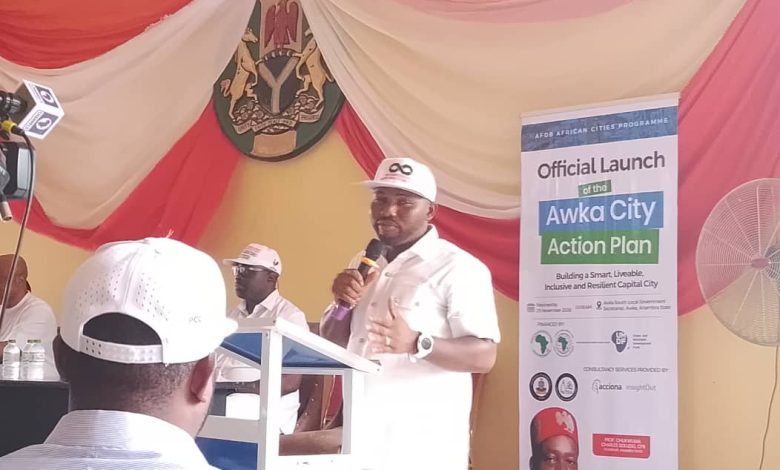
The plan, known as the Awka City Action Plan, was officially launched on Wednesday, with ACTDA identifying its implementation as a critical step towards transforming the state capital into a smart, resilient and economically vibrant city.
Speaking at the launch, the Managing Director and Chief Executive Officer of ACTDA, Dr Osita Onuko, said the future of Awka would depend not merely on the pace of its growth but on how deliberately and effectively that growth was planned and managed.
Onuko said the city’s rapid expansion had placed increasing pressure on urban infrastructure, public services and the environment, making an integrated approach to development imperative.
He identified traffic congestion, flooding, gully erosion, rising demand for housing and utilities, and the steady expansion of the built environment as some of the challenges requiring urgent and coordinated intervention.
According to him, the interrelated nature of these challenges makes it necessary for decisions on land use, transportation, housing, utilities, environmental protection and economic development to be addressed within a common framework.
He said the Awka City Action Plan would provide that framework by establishing a shared direction for the city’s growth, identifying priority areas for intervention and creating a structure for aligning government expenditure, private-sector investment and development-partner support.
The ACTDA chief executive said the plan was developed through stakeholder engagement in September 2026, adding that the contributions of participants helped ensure that its priorities reflected the needs and aspirations of residents.
He described the initiative as consistent with the vision of Governor Chukwuma Charles Soludo to transform Anambra into a liveable and prosperous smart megacity by 2050.
Onuko said the plan was supported through the African Cities Programme, an initiative of the Urban and Municipal Development Fund of the African Development Bank (AfDB), which promotes integrated planning, investment prioritisation and institutional capacity building in African cities.
He acknowledged the contributions of the AfDB and UMDF, as well as ACCIONA, the consulting firm engaged by the bank to develop the plan, and InsightOut Limited, ACTDA’s technical adviser.
He also commended the Anambra State Government, sister agencies and community representatives for their contributions to the process.
On the next phase, Onuko said ACTDA would focus on translating the plan’s priorities into bankable projects capable of attracting financing and delivering tangible improvements in residents’ lives.
He said the authority would provide institutional leadership and coordinate with relevant ministries, departments and agencies to ensure that the plan guided regulatory decisions and investment discussions.
“The true value of the plan will be measured by what happens next,” he said, stressing the need for accountability, continuity and measurable results.
Onuko called for sustained collaboration among government, development partners, the private sector, traditional institutions, professional bodies and residents, noting that the transformation of Awka could not be achieved by the state government or ACTDA alone.
He said the private sector would be critical to financing and delivering viable infrastructure and urban projects, while community participation would help ensure that development remained people-centred.
The ACTDA boss said the city action plan should be viewed not merely as a technical document but as a shared commitment to building a productive, resilient and inclusive capital city for future generations.