By Tony Okafor
In politics, timing and the ability to recognize impending danger are everything.
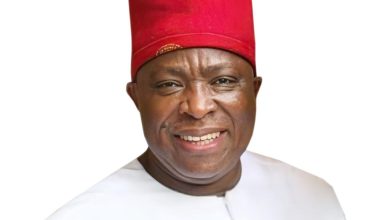
That is why the crisis rocking the African Democratic Congress (ADC) has cast fresh attention on Peter Obi and Victor Umeh — two politicians from Anambra State.
As the African Democratic Congress (ADC) sinks deeper into factional battles, court disputes, and leadership confusion, the decisions taken by Peter Obi and Victor Umeh to leave the party now appear less like ordinary defections and more like political foresight.
The two men moved through the ADC coalition talks almost like Siamese twins, consulting widely and engaging key stakeholders across the country.
But while others focused on the excitement of coalition politics, Obi and Umeh appeared more concerned about the structural health of the platform itself.
And they saw danger.
The warning signs were obvious: endless litigation, leadership tussles, caretaker controversies, and competing factions struggling for control.
The recent controversial emergence of Dumebi Kachikwu as the ADC’s presidential candidate only exposed the depth of the internal crisis.
Obi and Umeh wasted no time. Acting on the same political instinct, they exited the ADC simultaneously with their supporters and moved to the Nigeria Democratic Congress (NDC) after satisfying themselves that the party was free from crippling internal wrangling.
That decision is already proving politically significant.
Senator Umeh became one of the loudest voices explaining why Obi had to leave the ADC. His position resonated with many Nigerians, especially his argument that Obi often becomes the target of political destabilization whenever he joins a platform, with opponents engineering crises to weaken his momentum.
Within days of their move to the NDC, reports indicated that the party’s online registration portal came under intense traffic as thousands of Nigerians rushed to join what many now describe as a new political hope.
The Obi-Umeh alliance is also symbolic. Both men come from the Agulu/ Aguluzigbo communities of Anaocha Local Government Area of Anambra State and have built a relationship anchored on trust, strategy, and political discipline since 2001.
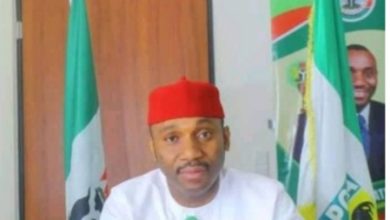
Umeh, a former National Chairman of APGA, remains one of Nigeria’s most experienced party administrators, having managed the party for nearly a decade.
That experience likely shaped his reading of the ADC crisis. He understood early that a political party trapped in endless court battles cannot effectively prosecute a national election.
Interestingly, on Thursday, May 28, 2026, Umeh is expected to present himself for the National Assembly primary election for Anambra Central Senatorial District — the seat he currently occupies which many Nigerians, especially Southeast youths, have urged him to seek re-election in 2027, citing his performance over the past three years, particularly his educational support programmes and free education initiatives that have benefited hundreds of students in universities and allied institutions.
The larger lesson from the ADC crisis is that many Nigerian political parties are built around temporary ambition rather than enduring institutional stability. Once internal contradictions emerge, courts become battlefields and alliances collapse.
Obi appears to have understood this reality early. His strength has never been theatrical politics, but calculation, timing, and strategic restraint.
From his days as APGA governor of Anambra State to the 2023 presidential election on the platform of the Labour Party, Obi has consistently demonstrated an ability to read political undercurrents before they become storms.
Today, the ADC turmoil appears to validate both Obi and Umeh.
Sometimes, the best politicians are simply those who see tomorrow—and quietly step away before the roof comes crashing down.