Nawfia Crisis: ‘Over 20 Killed in Two Years’ — Igwe Nwankwo Calls for Govt Intervention, Describes Obelle as ‘Meddlesome Interloper’
News

By Tony Okafor, Awka
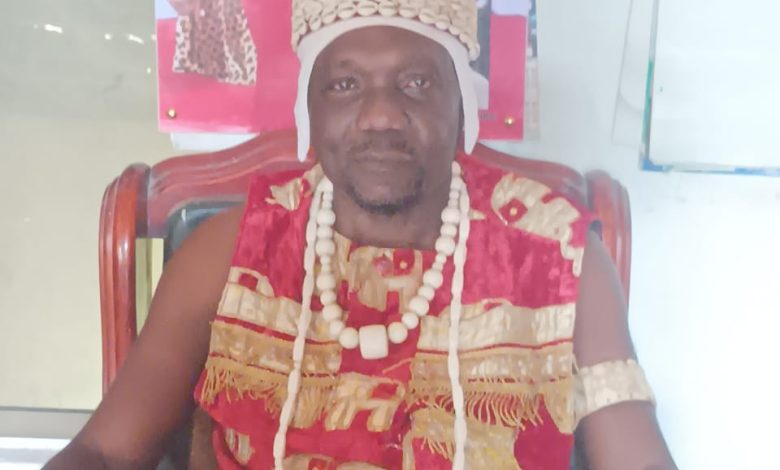
The embattled traditional ruler of Nawfia, Anambra State, Igwe Chijioke Nwankwo Osuofia II, has accused the state government of failing to enforce a subsisting court order restraining it and its agencies from recognising Chief Daniel Obelle as the traditional ruler of the community.
Nwankwo, who said the prolonged dispute had reached a “boiling point”, warned that the crisis in Nawfia could escalate if the government failed to intervene.
He alleged that more than 20 people had been killed in the community in the past two years, adding that recent killings around the Nawfia Express axis had further heightened tension.
The monarch spoke against the backdrop of the continued recognition of Obelle by the state government as the traditional ruler of Nawfia, four years after a court ruling which, according to Nwankwo, barred the government and its agencies from recognising him.
On August 11, 2022, the state government suspended 12 traditional rulers for allegedly travelling outside Anambra State without government approval.
The then Commissioner for Local Government, Chieftaincy and Community Affairs, Greg Obi, who announced the suspension, said the then Governor Willie Obiano invoked the Anambra Traditional Rulers Law of 1981 in imposing the sanction.
The affected monarchs were listed as Igwe Alex Edozieuno of Mkpunando; Mark-Anthony Okonkwo of Alor; Chukwuma Orji of Ezinifite; G.B.C. Mbakwe of Abacha; Chijioke Nwankwo of Nawfia; Nkeli Nelly of Igbarim; Anthony Onyekwere ; A.N. Onwuneme of Ikenga; Ikechukwu Chidubem of Umumbo; S.O. Uche of Ezira; Emeka Ilouno of Ifitedunu; and Peter Ikegbunem Udoji of Eziagulu.
According to Obi, the suspended monarchs were required to stop holding themselves out as traditional rulers or performing traditional rulers’ functions during the period of the sanction.
“During the sanction period, you are required to stop holding yourselves out as traditional rulers and to cease from discharging traditional rulers’ functions in your communities or elsewhere in the state and beyond,” the commissioner said.
He added that the sanction could be lifted after one year, renewed, or upgraded, depending on the government’s review of the conduct of the affected monarchs.
“By this sanction, membership of Anambra State Traditional Rulers Council is revoked; furthermore, any appointment in other government committees is hereby rescinded,” Obi said.
Our correspondent learnt that, unlike some of the other suspended monarchs whose cases were subsequently reviewed or pardoned, Nwankwo’s case remained unresolved, while the Obiano administration dethroned him and installed Obelle as the traditional ruler of the community.
Nwankwo, who rejected claims that he personally instituted legal action against Obelle, said his case was against the Anambra State Government, the Attorney-General of the State and the Anambra State Council of Traditional Rulers.
“I never ever sued him. The Government of Anambra State, Attorney-General of Anambra State and Anambra State Council of Traditional Rulers were sued. The person parading himself is what we call a meddlesome interloper. Nothing concerns him with this case; he is just a passenger in a car,” he said.
Nwankwo said his major grievance was the alleged failure of the state government to comply with subsisting court orders, despite what he described as repeated efforts to draw the attention of Governor Chukwuma Soludo and other relevant authorities to the matter.
He cited a ruling by an Anambra State High Court which, he said, directed the withdrawal of the certificate of recognition issued to Obelle as the Igwe of Nawfia.
The court, in the ruling made available to our correspondent, stated: “An Order of Court duly made with the requisite jurisdiction is binding and must be obeyed to the letter until duly set aside on appeal by the Appellate Court.”
The court further directed the Anambra State Government, the Attorney-General, the State Council of Traditional Rulers and other government agencies to “cease and never to recognise Daniel Obelle as Igwe of Nawfia or to accord him any privileges as such until the final determination of this case.”
The court added: “We live in a democratic and civilised society, not a zoo republic and not in a jungle, so laws made should be obeyed by all.”
Nwankwo said the order had neither been set aside nor stayed, arguing that the continued recognition of Obelle by government officials was therefore a violation of the court’s directive.
According to him, the Attorney-General, as the state’s chief law officer, ought to advise the government appropriately on the implications of the court order.
“I am angry because I have done everything for the government to recognise the law, which they have not done. The governor needs to handle this case carefully. It is getting to a boiling point,” he said.
Nwankwo also disputed claims that an appeal had effectively suspended the court order, arguing that the filing of an appeal, by itself, did not constitute a stay of execution.
The traditional ruler traced the origin of the current crisis to a constitution allegedly produced by a caretaker administration in Nawfia.
He said he challenged the constitution in court in 2012/2013 in Suit No. A/197/2013, alleging that instead of properly defending the matter, some persons took other steps that further complicated the dispute.
Nwankwo maintained that nine of the 10 villages in Nawfia had rejected what he described as the “so-called constitution” being presented as the governing document of the community.
He appealed to Governor Soludo to personally intervene, alleging that a former senior government official from Nawfia had previously frustrated his efforts to meet the governor over the dispute.
Although the official was no longer in government, Nwankwo alleged that he had continued to engage in “underground scheming” to prevent the governor from addressing the matter.
On his dethronement under the administration of former Governor Willie Obiano, Nwankwo said he had committed no offence warranting the treatment he received.
He said his visit to the late President Muhammadu Buhari was not a crime, stressing that the Nigerian Constitution guaranteed citizens the right to freedom of movement.
“Everybody has the right under the Nigerian Constitution to go anywhere they want without taking permission from anybody. That is Section 41 of the Nigerian Constitution. I have not committed any crime; I have not done anything,” he said.
Nwankwo further alleged that he had not received his salary for more than six years, despite court orders directing government authorities to comply.
He said two orders, dated June 21, 2022, and October 28, 2022, directed the Attorney-General to advise the government and its agencies to obey the relevant court order until it was overturned by a court of competent jurisdiction.
“For 75 months, over six years, I have not got any salary. Yet the court has directed the government twice,” he said.
Nwankwo expressed concern over the security situation in Nawfia, alleging that more than 20 people had been killed in the community since his dethronement.
“Nobody has investigated it. Over 20 people were killed in two years. Nawfia is at the worst point since Nawfia started existing,” he said.
He also alleged that his life had been threatened several times and that he had reported the threats to the Department of State Services, DSS, leading to some arrests.
To help sanitise leadership in the community, Nwankwo called for mandatory drug tests for anyone seeking to occupy, or currently occupying, traditional and community leadership positions in Nawfia, including himself.
He urged the state government to act before the crisis worsened, warning that the situation could have consequences beyond the traditional rulership dispute.
“The whole trouble in Nawfia is not a natural phenomenon,” he said, adding: “The trouble with Ndigbo, we wait to act till it is too late. This thing will snowball sooner than later.”
Nwankwo maintained that the constitution currently being paraded as the constitution of Nawfia was not validly representative of the community and called on the government to respect the court and resolve the dispute in accordance with the law.
He stressed that, to his knowledge, the order directing the government and its agencies not to recognise Obelle as Igwe of Nawfia had neither been appealed nor set aside.