By Christian ABURIME
Amidst the socio-economic frenzy of modern Nigeria, where quick fixes are often valorised over hard work and sensational success frequently eclipses genuine achievement, many may find it hard to choose a different path. Yet, at different levels of society, one can find those who dare to “beat them” rather than “join them”. And one can still see leaders who would not condone the travesty of right values.
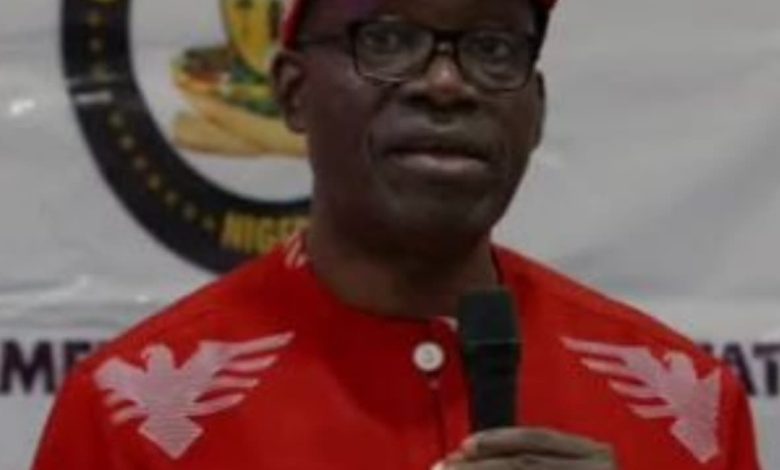
One such mindful, uncompromising leader is the intrepid Governor of Anambra State, Professor Chukwuma Charles Soludo, CFR. He is not your regular governor neither is he your regular politician; he is an uncommon leader wired differently to make the society better for the people. Reason he is engaged in a profound project of values reformation. His recent legal offensive against eight pastors staging “arrangee” miracles, following his earlier crackdown on fraudulent native doctors and fake Ph.D. holders, reflects a decisive shift from passive administration to active moral restoration.
This is no longer just about enforcing law and order; it is about dismantling a culture of fraud that has long permeated Nigerian society. By targeting these three pillars of deception, namely the Pentecostal charlatan, the quack herbalist, and the credential fraudster, Governor Soludo is sending an unambiguous message: In Anambra, integrity is non-negotiable.
What makes Governor Soludo’s approach so compelling is its holistic understanding of the Nigerian psyche. He recognises that the desire for instant gratification manifests in three distinct, yet interconnected, forms: the spiritual fraud, which exposes the dark underbelly of the prosperity gospel, and where faith is commodified and miracles are staged by paid actors; the native doctor quackery, peddling unproven magical breakthroughs to quick riches and power; and the academic impostor, featuring fake Ph.D. holders who hit at the foundation of meritocracy.
Thus, Governor Soludo’s relentless battles against the foregoing social evils form a strategic triad aimed at curing the societal malaise of ‘Get Rich Quick’ mentalities that have plagued Nigeria for decades with the philosophy that the end justifies any means. Whether through 419 fraud, religious deception, or academic forgery, the goal was always rapid wealth acquisition without the friction of discipline or skill acquisition.
Governor Soludo’s values reformation drive seeks to invert this calculus. By bringing the offenders before the courts, he is demonstrating that wealth gained through deception is temporary and carries the heavy cost of imprisonment and social stigma. True success is built on competence, hardwork and integrity — whether in religion or academia. And ethics is a competitive advantage, creating a society where trust lowers transaction costs and fosters real economic growth.
In other words, the Soludo administration is effectively telling Ndi Anambra and Nigerians at large: “You do not need to stage a miracle to get money. You do not need to fake a degree to get a job. You do not need to hoodwink our youth with a false magical power.” Instead, the path to prosperity is through education, skill development, and honest labour.
Critics might argue that the state government is overstepping into the realm of religion or tradition. However, Governor Soludo’s consistent legal framework, invoking the Homeland Security Law and anti-fraud statutes, grounds these actions firmly in civil order and public protection. He is not banning faith or traditional medicine; he is criminalising fraud. There is a profound difference between a pastor praying for healing and a pastor hiring actors to claim they were healed for financial gain.
This distinction is crucial. Governor Soludo is defending the sanctity of genuine belief and practice by purging the imposters who exploit them. And the implications extend far beyond Anambra. As the first governor in Nigeria to systematically dismantle these three fronts of fraud almost simultaneously, Governor Soludo is offering a blueprint for other states. He is proving that cultural change is possible, and it requires political courage and judicial precision.
Of course, the journey ahead won’t be easy. Changing a culture or entrenched social orientation takes more than arrests; it requires a sustained effort to build institutions that reward honesty. But the seeds are being sown. Every time a fake native doctor is remanded, every time a staged miracle is exposed in court, and every time a fake Ph.D. holder loses their reputation, the social contract is strengthened.
Governor Soludo’s fight is ultimately a fight for the soul of society and that of future generation. If Anambra can successfully pivot from a society of “fakers” to one of “makers,” it will achieve something greater than economic indicators alone. It will restore the dignity of labour and the sanctity of truth. And in doing so, it may well light the way for the rest of Nigeria to finally move beyond the era of quick fixes and enter an age of sustainable, ethical prosperity. In Anambra, the verdict is already being written: No more fakes!