By Tony Okafor
With campaigns for the 2027 presidential and National Assembly elections officially commencing on Wednesday, August 19, Nigerians have entered another defining season in the nation’s democratic journey.
According to the Independent National Electoral Commission, INEC, the presidential and National Assembly elections are scheduled for January 16, 2027. Campaigns began August 19.
This is the moment for politicians, supporters and voters to choose their words with care. It should not be a season for calumny, character assassination, or the reckless invention of stories against opponents.
It should be a season for creative reasoning, robust debate, and intelligent engagement with the issues that matter to Nigerians.
Nowhere is this more urgent than in the Southeast, where the 2027 election is already generating intense political expectations.
Across the Southeast and much of Nigeria, a widely held sentiment is that, following the end of Muhammadu Buhari administration, the presidency ought, as a matter of political equity, to return to the Southeast.
The argument is straightforward. Since the return to democracy in 1999, the Southwest and South-South of Southern Nigeria have produced Presidents Olusegun Obasanjo and Goodluck Jonathan respectively.
On that basis, many in the Southeast viewed Bola Ahmed Tinubu’s emergence in 2023 ( From the West) as a departure from what they considered an established rotational understanding.
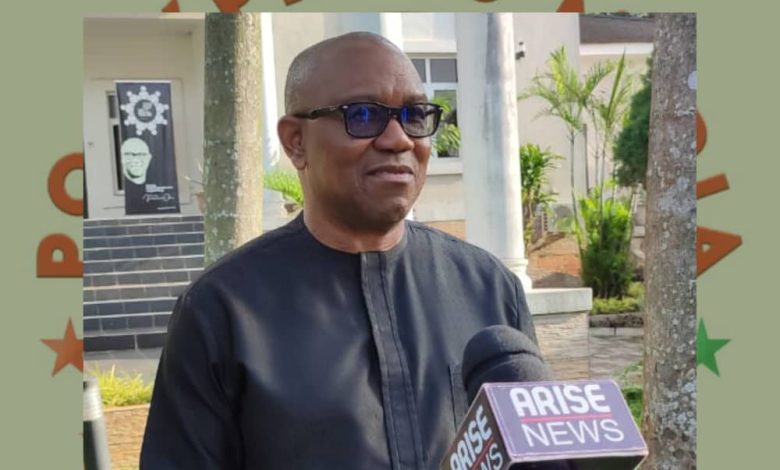
Peter Obi, then the Labour Party candidate and now the 2027 presidential candidate of the Nigeria Democratic Congress, NDC, mounted a formidable challenge and made a profound electoral statement across the country, especially among young Nigerians.
However, INEC declared Tinubu the winner, with Atiku Abubakar second and Obi third.
The 2023 General elections remain controversial in some quarters, particularly over technical difficulties with the electronic transmission of polling-unit results to the IReV portal. INEC itself acknowledged problems with the system on election day.
Whatever one’s view of the outcome, one thing is clear: the political consciousness awakened by Obi’s 2023 candidacy has not faded.
That is why the question for 2027 must go beyond the presidential ballot.
Can one genuinely vote for Peter Obi and, at the same time, vote against National Assembly candidates who openly identify with his political cause and philosophy?
Strategy matters here. If the objective is to elect an Obi-led Federal Government, should supporters not also think about the legislature that will work with that government?
A President does not govern in isolation. The National Assembly makes laws, appropriates funds, provides oversight, and shapes policy. An Obi presidency without a supportive or constructive majority in the National Assembly risks becoming a difficult political marriage. Even if Obi does not win in 2027, he will still need a strong support base to sustain his political philosophy and agenda.
This is not a call for blind loyalty. Every candidate must be assessed on competence, character, integrity, capacity, and commitment to the public good. But where candidates clearly share the same vision, it is hard to justify supporting the presidential project while deliberately weakening it at the legislative level.
The 2027 election must be approached with strategic thinking. Voters must look beyond noise, inducements, insults, and social-media propaganda.
If Nigerians genuinely believe it is time for change, that aspiration must be matched by organization, intelligent voting, and legislative alignment.
The ballot is not only about choosing a president. It is also about choosing the people who will determine whether that president succeeds.
Therefore, if you vote for Obi, ask yourself: does it make strategic sense to vote against those who genuinely identify with his political project?