Family of Late Military Officer Udeh Demands Independent Probe into Circumstances Surrounding Son’s Death
Human interest

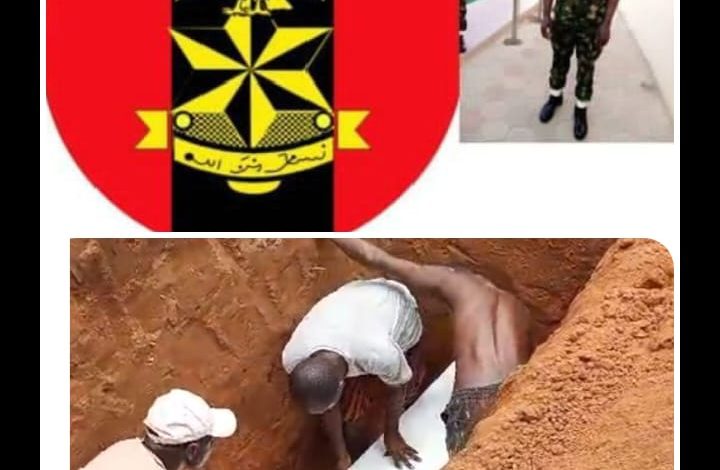
The family of the late soldier, Jude Osondu Udeh, has called for a thorough, transparent, and independent investigation into the circumstances surrounding the untimely death of their son.
Speaking through their lawyer, Sir Ifeanyi Ejiofor, the family stated that they are seeking formal communication through appropriate channels, including the Honourable Minister of Defence and the Chief of Defence Staff.
Ejiofor made this known in his weekly statement titled “Weekend Musings: Setting the Record Straight on the Manifestly Erroneous and Misleading Account Advanced by the Nigerian Military Regarding the Disgraceful Handling of the Death and Burial of a Young Soldier Late Jude Osondu Udeh.”
The family maintained that their demand is neither excessive nor unreasonable; rather, it represents the bare minimum owed to a soldier who paid the ultimate price in service to his country, particularly under questionable circumstances.
According to the statement, the military’s insinuation that it bore financial responsibility is demonstrably false.
The family noted that not a single kobo was expended by the Nigerian military in transporting the deceased’s remains to his hometown in Ezeagu Local Government Area of Enugu State, nor in settling mortuary expenses.
These obligations, the statement said, were borne entirely by the grieving family, with documented receipts readily available as proof.
“One might have expected, at the very least, that an institution so eager to claim procedural propriety would ensure its assertions were anchored in verifiable fact rather than convenient fiction,” the statement added.
The family further described as the most egregious affront the complete absence of military presence at the burial. Despite due notification to the 82 Division in Enugu, not a single soldier was present to accord the deceased even the most basic military honours.
“No guard of honour. No ceremonial salute. Not even a symbolic representation. One is compelled to ask: has the standard for honouring fallen soldiers now been so dramatically lowered that total absence qualifies as compliance? Or is this a novel doctrine in military tradition, where silence replaces the bugle and invisibility substitutes for honour?” the statement queried.
The family indicated that it may be compelled to publish visual evidence of what it described as “astonishing neglect,” to enable the public to assess whether this constituted the “full compliments” the military claims to have rendered.
Addressing claims by some commentators that the body should not have been released to the family, the statement described such views as legally untenable and inconsistent with established military practice.
It emphasized that the family of a fallen soldier retains the right to request the release of their loved one’s remains for burial.
Where such a request is granted, as in this case, it does not extinguish or diminish the military’s obligation to accord the soldier full ceremonial honours. “Honour, after all, is not a logistical inconvenience to be waived at will; it is the very essence of military tradition,” the statement noted.
The family expressed concern that what is particularly troubling is not only the initial lapse but the subsequent attempts to obfuscate, deny, and recast events in a manner that strains credulity.
They stressed that institutions earn respect not by asserting infallibility, but by demonstrating the humility to acknowledge errors and the integrity to correct them.
According to the statement, it would have served the Nigerian military better to admit, with candour, that a regrettable oversight occurred and to take immediate corrective steps.
“Regrettably, instead, the military has presented a narrative suggesting that what the world plainly did not see somehow occurred in a realm beyond evidence,” it added.
The statement further emphasized that the issue transcends the case of one fallen soldier, warning that it sends a troubling message to serving personnel,that their sacrifice may be met not with honour, but with administrative indifference and post-event revisionism.
“The abandonment of Soldier Jude Osondu Udeh in death, after serving his nation in life, constitutes a profound moral failing. It is a disservice not only to his memory but to the very ideals the military purports to uphold,” it stated.
The family reiterated that it does not seek confrontation, but rather truth, accountability, and dignity principles it described as fundamental obligations rather than extravagant demands.
It expressed hope that the military high command would, even at this stage, choose the path of honour by acknowledging lapses, offering a sincere apology, instituting corrective measures, and ensuring that no other family is subjected to similar indignity.
“Anything less would only deepen the wound, and history is seldom kind to institutions that prefer denial over duty,” the statement asked .
The family also noted that it felt compelled to respond to what it described as a narrative circulated by the Nigerian military that is “remarkably detached from verifiable facts,” raising concerns about the implications for public confidence and the morale of personnel still serving on the frontlines.
“Upon a careful reading of the said account, our immediate concern was not merely the distortion it contained, but the far-reaching implications such institutional indifference to truth portends for public confidence and for the morale of those gallant men and women still risking their lives in service to the nation,” the statement said.
It added that the decision to initially refrain from convening a press conference to address the alleged inaccuracies was deliberate, aimed at preserving institutional dignity and avoiding damage to the morale of troops.
“However, silence must never be mistaken for acquiescence,” the statement stated.