EDITORIAL: Nawfia Throne Crisis — Time for Soludo to Review Igwe Chijioke Nwankwo’s Case
EDITORIAL

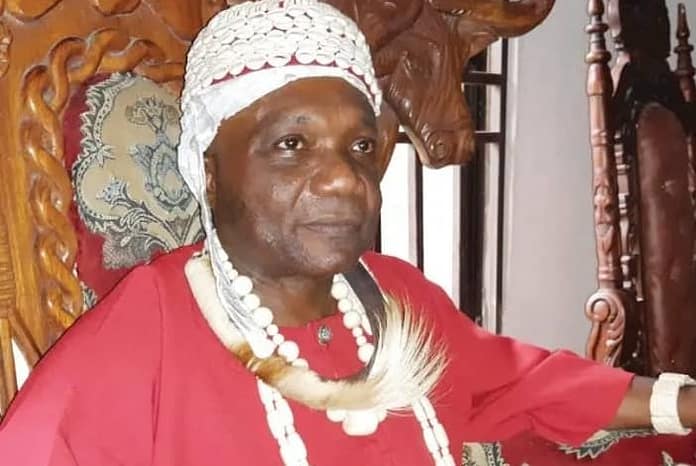
Great leadership demands the courage to review past actions and correct injustice. Governments are not infallible, and history honours leaders not for being mistake-free but for possessing the humility and wisdom to make amends when necessary.
It is in that spirit that Governor Chukwuma Soludo should take a fresh, objective look at the lingering Nawfia traditional stool crisis, particularly the withdrawal of recognition from Igwe Chijioke Nwankwo.
The controversy began in 2020 when the administration of former Governor Willie Obiano suspended and subsequently withdrew the certificate of recognition issued to Igwe Nwankwo by the administration of the late Dr Chinwoke Mbadinuju around 2000.
His alleged offence was participating in a visit to Abuja alongside Prince Arthur Eze and other traditional rulers to meet then President Muhammadu Buhari.
Many have continued to question whether the punishment was proportionate to the act. More troubling is the fact that the dispute has fractured the Nawfia community, fuelled years of litigation, and created uncertainty and tension that persist to this day.
The matter is further complicated by court interventions that reportedly questioned the process that produced another claimant to the throne. The result has been a prolonged stalemate that continues to hold the community hostage.
Governor Soludo has earned a reputation for taking bold and principled decisions. His administration’s recognition of the contributions of the late Dr Chinwoke Mbadinuju, including the renaming of the Uli campus of Chukwuemeka Odumegwu Ojukwu University in his honour, demonstrated a willingness to correct perceived historical wrongs.
That same courage should now be applied to the Nawfia situation. The governor should carefully examine whether due process was followed, whether the penalty imposed on Igwe Nwankwo was fair and just, and whether peace, equity and stability would be better served by a comprehensive review of the matter.
Another important dimension deserves consideration. Prince Arthur Eze remains one of Anambra State’s most prominent sons and a consistent supporter of successive governments in the state. The Abuja visit that triggered the crisis was not a private adventure but one led by a respected elder statesman and attended by several traditional rulers.
It is therefore difficult to understand why participation in that trip warranted the revocation of a monarch’s recognition. Whether one agrees with the visit or not, the perception of injustice surrounding the decision continues to fester.
Governor Soludo came into office with a promise to build a livable and prosperous Anambra founded on fairness, transparency and the rule of law. Those principles demand that contentious issues inherited from previous administrations be subjected to objective scrutiny and impartial review.
This is not a call for favouritism, nor is it an attempt to undermine the courts. Rather, it is an appeal for statesmanship — a sincere and comprehensive review of a matter that has remained unresolved for more than five years and continues to cast a shadow over one of Anambra’s important communities.
If such a review establishes that an injustice occurred, Governor Soludo should not hesitate to remedy it. Leaders are remembered not only for the projects they build but also for the wrongs they correct.
The Nawfia throne dispute has lingered for far too long. The time has come for clarity, reconciliation and justice.
Governor Soludo possesses the political will, moral authority and leadership credentials required to bring this matter to a just conclusion. He should act.
Ubi jus ibi remedium — where there is a right, there is a remedy.